
Rental Car to a Hiking Trailhead: Checklist
Driving a rental car to a trailhead comes down to four things you should confirm in advance: the permitted final stretch, legal parking, weather risk (mud/snow) and your return time.
9 min read
In this article
Driving a rental car to a trailhead comes down to four things you should confirm in advance: the permitted final stretch, legal parking, weather risk (mud/snow) and your return time.
Key takeaways
Before heading to a trailhead in a rental car, confirm four things in advance: the last permitted stretch of road, a legal parking spot, the seasonal risk of mud or snow, and your return time along with any restrictions set by the owner.
- The permitted final stretch is decided by the owner, not by the map. Always ask about gravel roads before booking.
- Park only where road signs allow it, in line with Armenia's traffic rules.
- Mud and snow are seasonal risks. Check the weather on the day of departure, not a week earlier.
- Your return time is part of the contract. Agree any delay with the owner beforehand.
- JanCar is a connecting platform. The price, deposit, insurance and handover terms are confirmed through the listing and directly with the owner — not by the platform.
Why a trailhead is a special case for rentals
A hiking trailhead is a special case because the last stretch of road often falls outside normal rental risk territory: gravel, steep grades, mud or snow. Driving around town or on a highway and tackling the final three kilometres of a mountain valley are two different situations — both for the car and for the contract.
Most guides only describe the route itself. But in Armenia the rental market is largely peer-to-peer: the car belongs to a specific person, and that person decides where their car may be driven. So the "trailhead" question has two layers — physical (is the road passable?) and contractual (does the owner permit it?).
Typical examples are the Tatev–Goris direction, where stretches near the Tatev cable car station vary in surface, and Dilijan National Park, where trailheads sit next to forest gravel branches. In both cases the right question is the same: "where does my permitted stretch end?"
Step-by-step checklist before departure
Before you leave, work through four steps: confirm the final stretch with the owner, choose a legal parking spot, check the weather and road conditions on departure day, and agree the return time. This order prevents each of the most common problems.
Step 1: Confirm the permitted final stretch with the owner
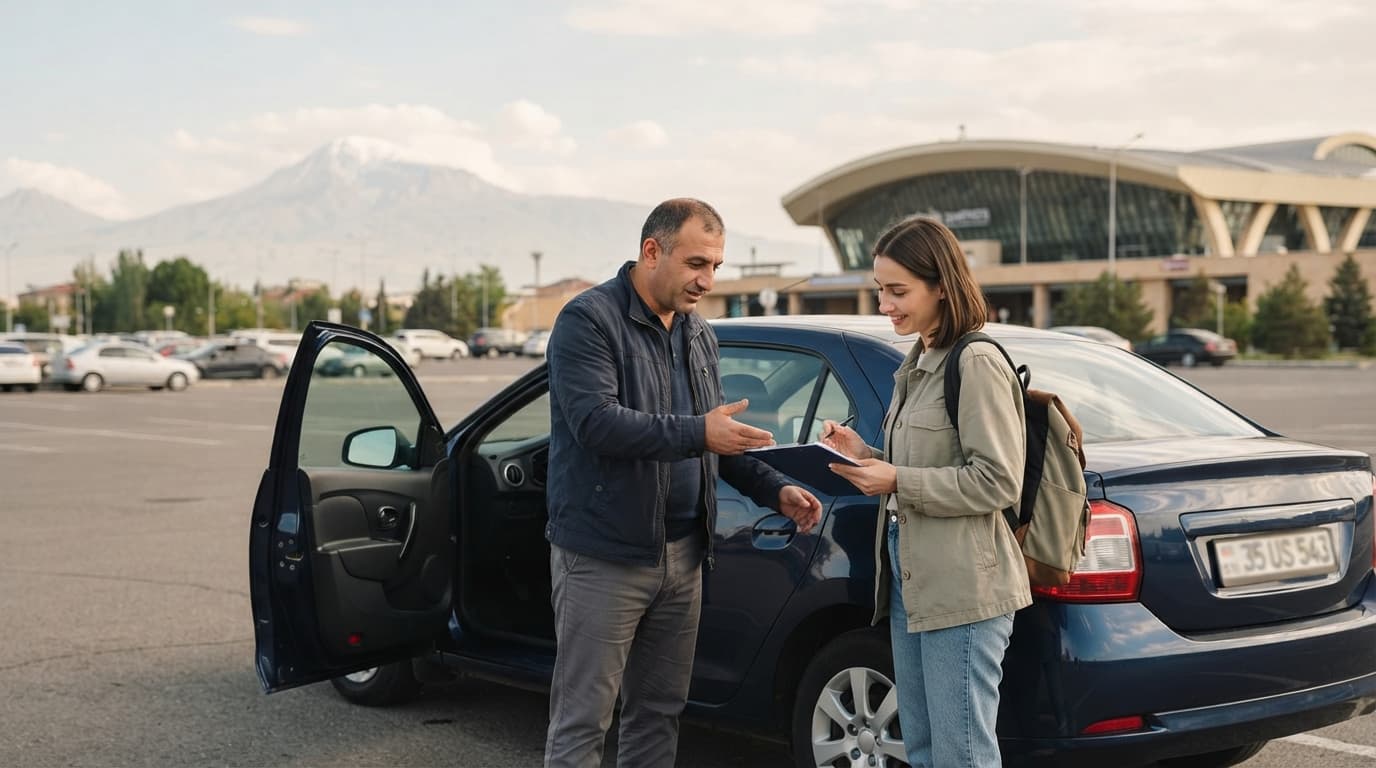
Confirm the permitted final stretch before booking, with a direct question to the owner: "the route ends 3 km past village X on a gravel section — can the car be driven there?" The listing may include restrictions, but they don't always cover your specific route.
If the owner doesn't allow gravel, that's not a problem — it's a condition. Plan your start from a paved point and walk the last stretch, adding the extra time to your schedule.
Step 2: Choose a legal parking spot
Park only where signs and rules allow it. Armenia's traffic rules define where parking is prohibited, and those rules can be checked via the official police source (roadpolice.am, checked 2025). Fine amounts change, so we won't quote a specific figure here — check the current provisions before you set off.
The practical rule is simple: if there's no parking at the trailhead, park in the nearest settlement or in a widened section of road where the car in no way obstructs traffic, then walk the rest.
Step 3: Check the weather and road conditions on departure day
Check the weather and road conditions on the day of departure, not during planning week. The official forecast is available on the Hydromet website (armhydromet.am), and general information on road conditions across the republic is available on the government portal (gov.am). Yesterday's rain can turn a gravel road into mud even if the morning looks clear.
Step 4: Agree the return time and terms
Your return time is part of the contract, so agree it in advance — keeping in mind that mountain hikes often run longer than planned. Build in a buffer of an hour or two, and if you realise you're running late, call the owner before the agreed hour passes, not after.
The permitted final stretch and legal parking
When judging the permitted final stretch, start with the surface: asphalt, gravel-paved or natural dirt. Asphalt is a normal rental risk, gravel-paved is moderate, and a natural dirt section is a separate case requiring explicit consent — especially after rain.
Type of section
Risk
What to do
Paved (asphalt)
Normal
Drive without asking further
Gravel / wide dirt road
Moderate, weather-dependent
Ask the owner, check the weather
Narrow, steep dirt track
High
Leave the car at the start, walk the rest
For legal parking, keep the main prohibition cases in mind:
- parking where your car forces other drivers out of their lane or to stop at the edge of oncoming traffic.
- parking within the zone of a "no parking" sign, or near a zebra crossing or bus stop.
- parking at an unsigned spot with limited visibility — on a bend, crest or descent.
If parking rules near the trailhead seem unclear, ask locals or the owner — they often know exactly where cars can be left without trouble.
Mud, snow and weather risks
Mud and snow are the main risks of trailhead rentals because they change a road's passability overnight. After rain, a gravel climb can become impassable for a car on ordinary tyres, and snow can hide deep potholes.
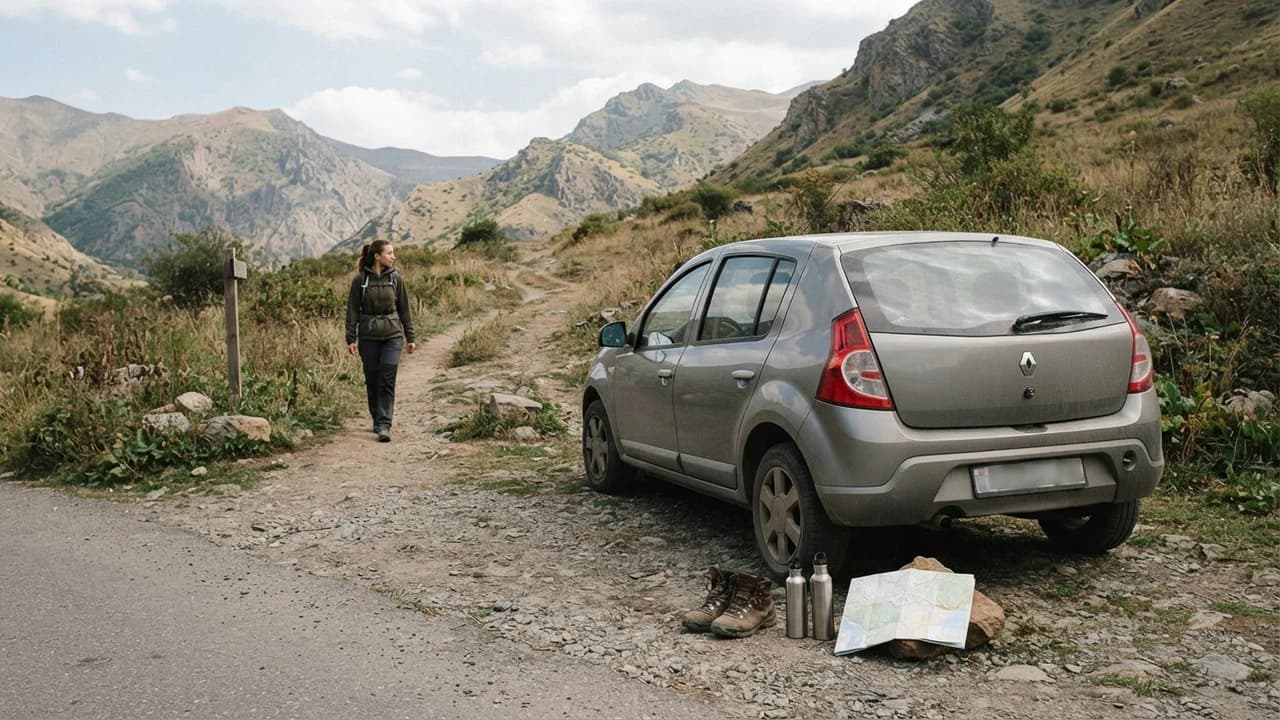
There's always a safe alternative, and it has two forms. First: leave the car at the last passable point and walk the final stretch — this usually adds just 20–40 minutes. Second: postpone the trip until the road dries out, if your schedule allows.
When assessing the risk, check three things on departure day: the official forecast (armhydromet.am), overnight precipitation, and the type of tyres on the car. In winter, also ask the owner whether winter tyres are fitted — listings don't always mention it.
The most common mistake here: people judge the road as they leave Yerevan, not as they approach the trailhead. Conditions in the mountains can be completely different from those in the capital.
Owner restrictions and JanCar's role
An owner's restrictions — gravel, parking location, return time, mileage limit — apply only to the extent they're written into the listing and confirmed in the contract. They're neither law nor platform rules; they're the terms of the specific car's owner.
JanCar's role is different. The platform is the link between someone heading to a hiking destination and the person who owns the car. JanCar has no fleet of its own, sets no prices and doesn't decide where a car may be driven. Every listing belongs to an independent owner (a "host").
The deposit falls under the same layer. JanCar does not receive, block or hold a deposit. If the owner states a fixed deposit in the listing, its amount and transfer are arranged directly between you two.
Before booking, check the listing for the price, dates, mileage limit, fuel policy, insurance (MTPL or comprehensive/CASCO — and what it covers), whether a deposit applies, and the handover location. If your route includes a gravel section, verifying insurance coverage benefits both sides: coverage limits mean something only in the policy itself, never in assumptions.
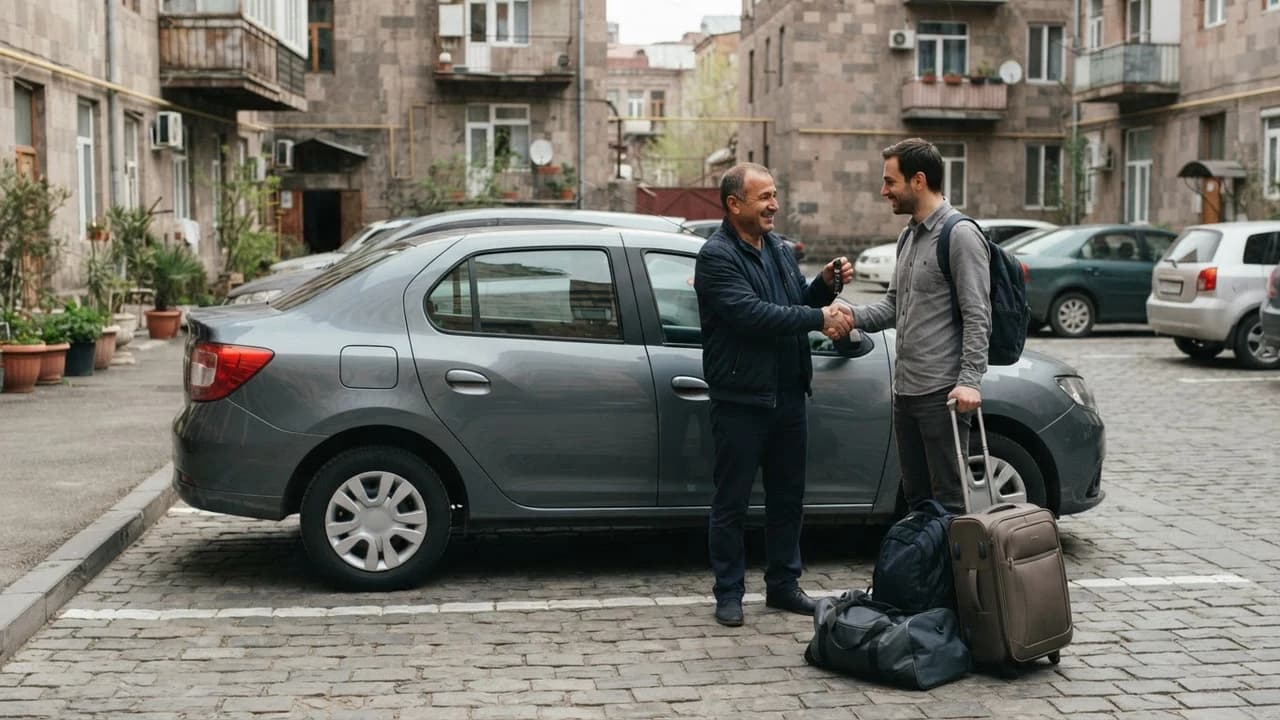
Finally, at handover it helps to record the car's condition: photos from all sides, fuel level, existing damage. A digital handover act signed by both sides makes disputes easier to prevent if some scratch appears on a gravel stretch.
Frequently asked questions
Can I drive a rental car on a gravel road?
Only if the owner permits it. Ask before booking, describing the specific section and route. No mention of gravel in the listing isn't permission.
Where can I park near a trailhead without getting fined?
Park only where signs allow it, without obstructing traffic. Rules are defined by Armenia's traffic rules, and current fine amounts can be checked on roadpolice.am before you set off (checked 2025).
What do I do if I'm returning later than agreed?
Call the owner before the agreed hour ends and arrange a new time. Whether a late fee exists, and how large it is, is decided by the owner through the listing or contract terms.
Does insurance cover damage on gravel sections?
It depends on the specific policy. MTPL is mandatory liability insurance, while comprehensive (CASCO) covers vehicle damage — subject to its terms. Ask the owner to show you the current policy and read the coverage limits before heading onto gravel.
Does JanCar hold the deposit?
No. JanCar does not receive, block or hold a deposit. If a listing requires one, it's arranged directly between you and the owner.
Official sources
The following sources were used to verify facts in this guide.
Related search paths
Continue exploring this topic with these verified related guides.
- Tatev–Goris by rental car: checklist
- Dilijan by rental car: what to know before booking
- Checking your rental car's MTPL insurance: 4 steps
- Rental car pre-inspection: checklist
- Jermuk by rental car: what to know
This is general information. JanCar does not receive or hold a vehicle deposit. Check price, deposit, insurance and every other term on the listing and directly with the owner.
More JanCar guides
Continue with these closely related practical guides.
- Camping by Car in Armenia: A Renter's Checklist
- Business Trip in a Rental Car in Armenia
- Saghmosavank & Hovhannavank by Car: One-Day Guide
- Etchmiadzin & Sardarapat by Car: One-Day Itinerary
- Photo Trip in a Rental Car
- Khor Virap & Noravank by Car: A One-Day Guide
- Car rental dispute evidence checklist for owners
- Pedestrian Crossings & School Zones in Armenia
Frequently asked questions
Can I drive a rental car on a gravel road?
Only if the owner permits it. Ask before booking, describing the specific section and route. No mention of gravel in the listing isn't permission.
Where can I park near a trailhead without getting fined?
Park only where signs allow it, without obstructing traffic. Rules are defined by Armenia's traffic rules, and current fine amounts can be checked on roadpolice.am before you set off (checked 2025).
What do I do if I'm returning later than agreed?
Call the owner before the agreed hour ends and arrange a new time. Whether a late fee exists, and how large it is, is decided by the owner through the listing or contract terms.
Does insurance cover damage on gravel sections?
It depends on the specific policy. MTPL is mandatory liability insurance, while comprehensive (CASCO) covers vehicle damage — subject to its terms. Ask the owner to show you the current policy and read the coverage limits before heading onto gravel.
Does JanCar hold the deposit?
No. JanCar does not receive, block or hold a deposit. If a listing requires one, it's arranged directly between you and the owner.
Where to go next
Sources
- police.am
police.am · official source
- armhydromet.am
armhydromet.am