
Khor Virap & Noravank by Car: A One-Day Guide
You can see Khor Virap and Noravank in one day with a rental car — if you get the order right and keep a daylight buffer. The road, parking and risks, step by step.
10 min read
In this article
Khor Virap and Noravank can be covered in one day with a rental car if you travel in the right order and build in a buffer of daylight hours. The exact timing depends on the road, the weather and your stops — so this guide promises no fixed "schedule."
\[hero image\]
Key Takeaways
One day is enough for Khor Virap and Noravank when you plan around daylight hours rather than an "ideal" timetable. Both sites sit south of Yerevan, and the main line connecting them is the M-2 highway through the Areni gorge section.
- The order sets the quality of the day: Khor Virap is best seen in the morning, when the view of Ararat is more often clear.
- The Areni section is the slowest part of the route. Curves, limited visibility and seasonal conditions always cut your average speed below the map's number.
- Parking exists at both sites, but the setup and terms need checking on the day you go.
- The renter's job is documentation: photos, fuel level, a damage diagram and a handover act.
- JanCar is a connecting platform. The price, deposit, insurance and return terms are set by the car's owner in the listing.
The Logic of the Route: Which Order to Visit
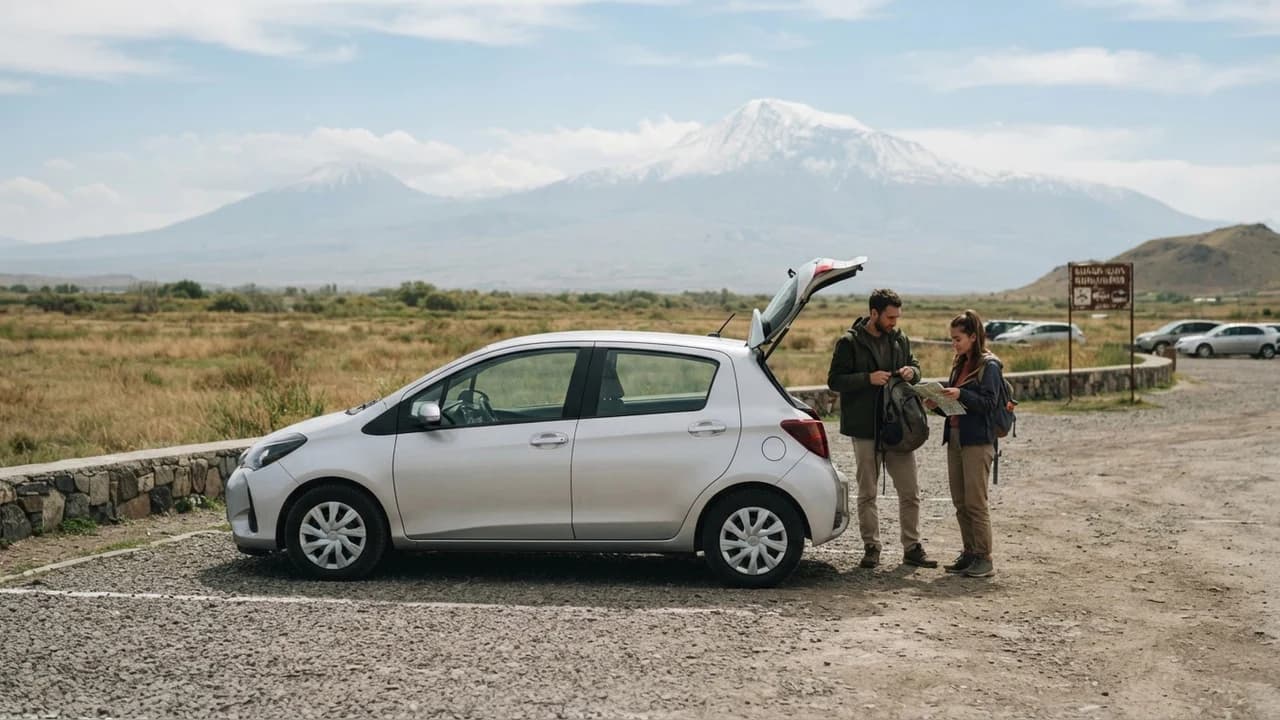
For a Khor Virap–Noravank trip by car, the most practical order is Khor Virap first thing in the morning, then south toward Areni and Noravank. This sequence works for three reasons: morning skies are clearer over Ararat, temperatures stay comfortable in the car, and the Amaghu gorge gets its best light in the second half of the day, when the western sun often brings out the rock faces.
The logic is simple: both monasteries lie south of Yerevan, but in different directions. Khor Virap is in Ararat Province, near the Turkish border; Noravank sits in Vayots Dzor, in the Amaghu gorge. To link them, you cross the Ararat plain heading south until you meet the M-2 highway.
Option A: Yerevan → Khor Virap → Noravank → Yerevan
Leave Yerevan early and head south toward Khor Virap. After seeing the monastery and its surroundings, rejoin the southern route and continue to Areni, then into the Amaghu gorge and up to Noravank. The return leg from Noravank to Yerevan runs back along the same M-2, northbound.
This option's strength is how it manages light risk. If the day runs longer than planned, most of your return leg is open highway — far more predictable at dusk than the gorge road.
Option B: Noravank first
Doing Noravank first makes sense on hot summer days, when the gorge stays cooler in the morning and the Khor Virap plain bakes by midday. It also suits travelers planning a long stop at Khor Virap for sunset views.
The drawback is the mirror image: at the end of the day you're left with the climb out of the gorge and the crossing of the Ararat plain, and Khor Virap's view of Ararat is more often hazed over by midday atmospheric haze.
The Road and the Areni Section
The backbone of the route is the M-2 highway toward Yerevan–Goris, while the turn-offs for Khor Virap and Noravank run on regional roads. Distances look small on the map, but three factors decide your real speed: traffic leaving Yerevan, the condition of stretches across the Ararat plain, and the mountainous Areni gorge section.
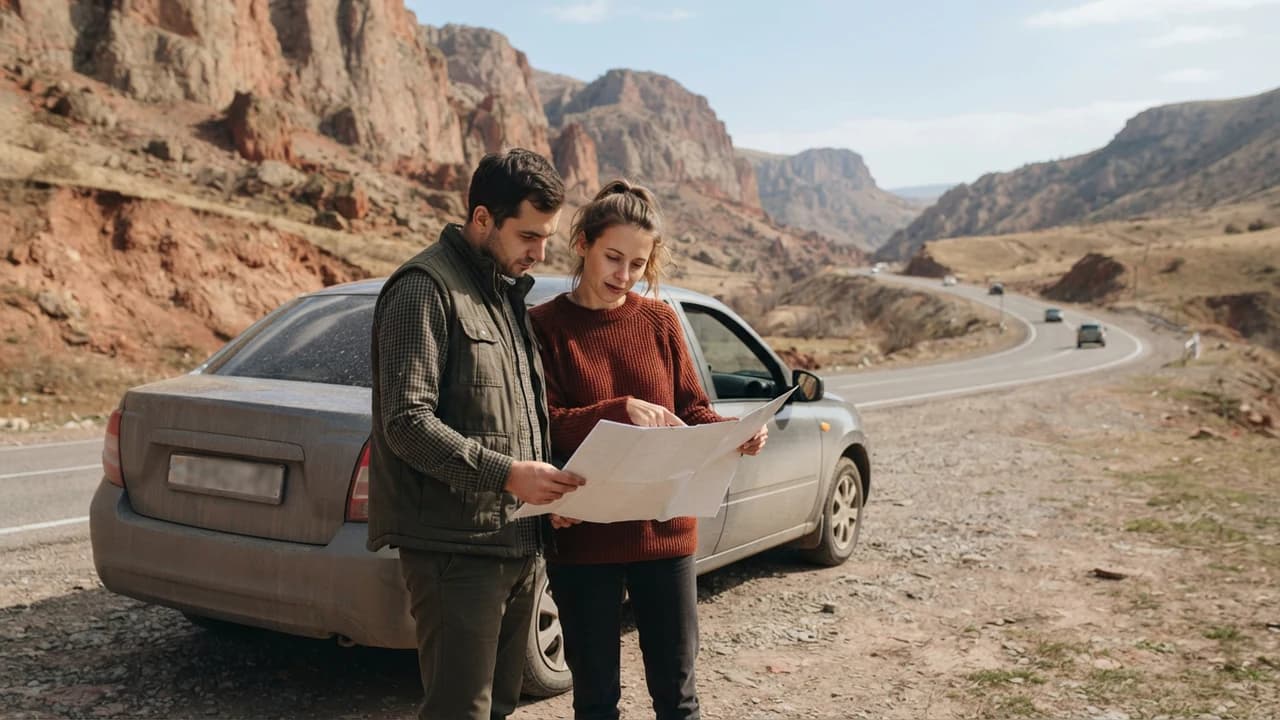
Through the Areni section the road runs inside the gorge — curves, blind bends and stretches with limited visibility. In winter and after rain this segment can slow traffic down dramatically, and in fog it can effectively rewrite your whole day's plan. It's precisely because of this stretch that we promise no fixed duration: quoting an exact number would be misleading.
What to Check on Departure Day: Weather and Road Conditions
On the morning you leave, check three sources: the official forecast from Armenia's Hydrometeorological Service under the Ministry of Environment (meteomonitoring.am), road announcements from official police channels (roadpolice.am), and general administrative information on the government portal (gov.am). Date every check to your departure day, because road conditions change fast.
If the forecast shows fog or rain in the gorge area, consider splitting the trip: Khor Virap and the plain one day, Noravank the next. Discuss extending the rental period with the owner in advance, since availability is governed by the listing's terms.
Stops and Optional Points
The natural stops are Khor Virap, optionally Areni, and then Noravank in the Amaghu gorge. Every stop adds time, so decide beforehand which are must-sees and which are optional.
- Khor Virap Monastery: the main stop, with the view of Mount Ararat. In the morning hours the view is usually clearer and the temperature comfortable.
- Areni (village and gorge): an optional stop en route. The Areni-1 cave is here too — it can become the day's "extra" hour if your schedule is tight.
- Noravank (Amaghu gorge): the day's second anchor point. Allow enough time for the gorge viewpoints without rushing the drive back.
The rule is simple: if any optional stop threatens your daylight buffer for the return, drop it. Driving the last mountain stretch at dusk is the riskiest part of the entire day.
Parking at Both Sites
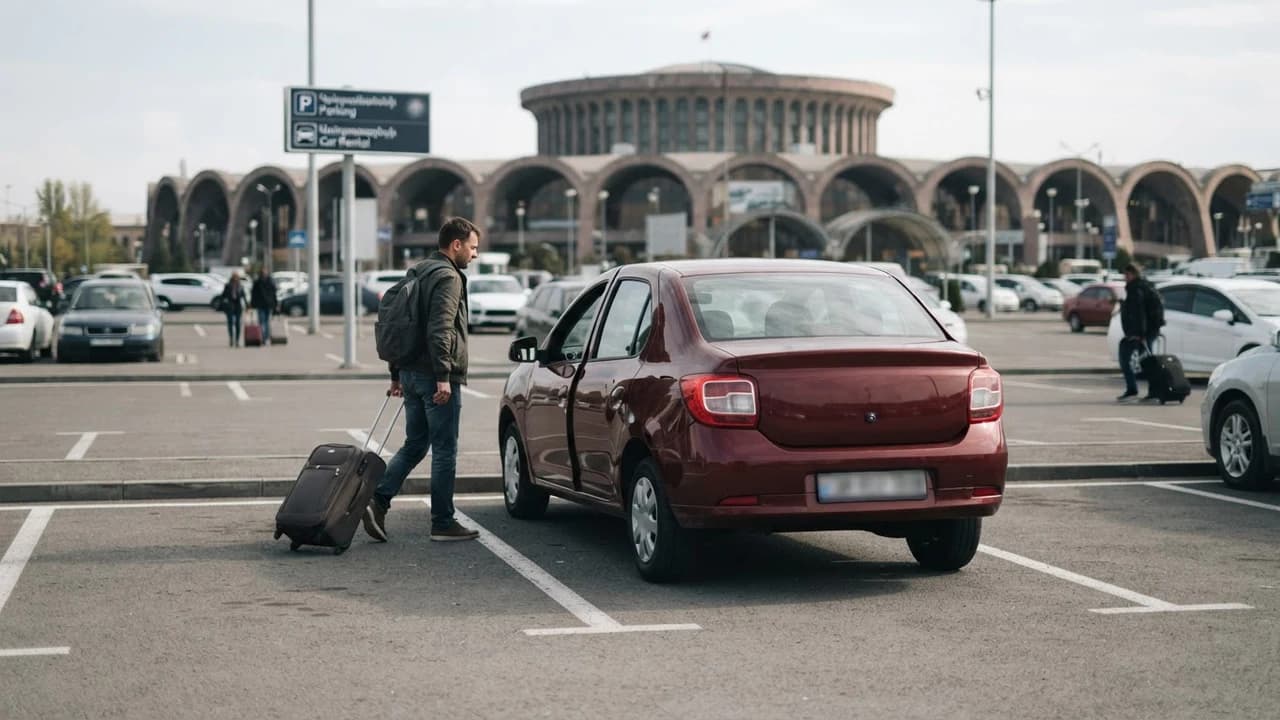
Parking options exist near both monasteries, but the arrangements and conditions vary — which is why we won't invent fees or layouts. During peak season and popular hours, finding a spot can take noticeably longer than in shoulder season.
Practical rules when parking a rental car: use the designated lot, not the roadside edge where the car could obstruct traffic. Armenia's vehicle parking rules set the general requirements, and local conditions you should judge on site — without leaving the car in an unsafe spot.
Daylight Hours and Realistic Planning
The main reason we refuse to promise a fixed duration is the huge gap in daylight between winter and summer. The same itinerary that leaves you free evenings in June can end on the road at dusk in December. Before departing, check the approximate sunset time for your date and plan the return leg to finish before it.
Buffer time is also risk management: an unplanned stop, roadworks, fog in the gorge, or simply a stop you want to extend. If the day clearly isn't going to fit, it's safer to split the route over two days or choose an organized tour than to rush a mountain section at dusk.
Step-by-Step Checklist Before You Leave
This checklist covers the renter-driver's responsibilities before departure. Run through it once at home and once again when you collect the car.
Documents, Fuel, Insurance, Deposit Terms
- Documents: make sure your driving licence is valid and the rental agreement is signed. Foreign visitors should confirm their licence's validity in Armenia through official sources before departure.
- Insurance: ask to see the car's current insurance policy and check what it covers. Coverage is not an assumption — read it, don't infer it.
- Deposit: JanCar does not receive, block or hold a security deposit. If a listing states a deposit, its amount and handling are arranged directly between renter and owner.
- Fuel: record the fuel level before setting off and agree the return condition with the owner.
- Handover: we recommend optional photos of all sides, a damage diagram and a digital handover act signed by both parties — cheap prevention against disputes.
Mistakes and Main Risks
The most common mistake is calculating "ideal" times with no buffer. Second: treating the Areni section like ordinary highway when it's actually a gorge segment with seasonal risks. Third: scheduling the return leg at dusk.
- Running short of time in the evening: the fix is a two-day version, or dropping optional stops.
- Ignoring the weather: fog in the gorge changes the whole day — check the forecast on the morning you leave.
- An undocumented handover: without photos and a handover act, damage disputes become word against word.
- Deposit confusion: the deposit is the owner's term, not a JanCar guarantee or platform protection.
JanCar's Role and the Owner's Terms
JanCar is a peer-to-peer platform: it connects renters with independent owners but owns no fleet itself. The car, price, availability, insurance, mileage, fuel, deposit, and pickup/return place and time are all set by the listing's terms and agreed directly with the owner.
The practical takeaway: before planning the route, read every term of the listing you've chosen and confirm with the owner whether driving mountain sections in that particular car is allowed, what fuel level is expected on return, and where the handover takes place. JanCar's catalog and how-it-works section help you understand the process, but the final terms always live in the listing.
Frequently Asked Questions
Can Khor Virap and Noravank be done in one day?
Yes, it's possible — if you travel in the right order, the weather cooperates and you keep a daylight buffer. In winter or heavy fog, consider splitting the trip into two days.
Is there parking at Khor Virap and Noravank?
Both sites have parking options near the monasteries, but the arrangements and conditions vary. Check on site and park in the designated lot, not on the road edge.
What if there's fog in the Areni section?
Slow down, switch on your low beams and drop optional stops. If visibility is very poor, it's safer to split the day in two or take an organized tour.
Does JanCar hold a security deposit?
No. JanCar does not receive, block or hold a security deposit. If a listing states a deposit, its amount and handling are arranged directly between renter and owner.
What documents do I need to drive this route in a rental car?
A valid driving licence, a signed rental agreement and the car's current insurance policy. Foreign visitors should verify their licence's validity in Armenia through official sources before departure.
Official Sources
The following sources were used to verify facts in this guide.
Related Reading
Continue the topic with these verified related guides.
- Garni and Geghard by Car in One Day: A Realistic Guide
- Tatev and Goris in a Rental Car: Checklist
- Driving a Rental Car in Yerevan: Checklist
- Driving in Fog in the Mountains: Rules and Checklist
- Lost Rental Car Keys: What to Do
- CTP Insurance for Rental Cars: What to Know
This is general information. JanCar does not receive or hold a vehicle deposit. Check price, deposit, insurance and every other term on the listing and directly with the owner.
More JanCar guides
Continue with these closely related practical guides.
- Saghmosavank & Hovhannavank by Car: One-Day Guide
- Etchmiadzin & Sardarapat by Car: One-Day Itinerary
- Business Trip in a Rental Car in Armenia
- Photo Trip in a Rental Car
- Rental Terms Confirmation Message: 7 Fields
- Rental Car to a Hiking Trailhead: Checklist
- Haghpat & Sanahin by Car: One-Day Route Plan
- Buffer Time Between Car Rentals
Frequently asked questions
Can Khor Virap and Noravank be done in one day?
Yes, it's possible — if you travel in the right order, the weather cooperates and you keep a daylight buffer. In winter or heavy fog, consider splitting the trip into two days.
Is there parking at Khor Virap and Noravank?
Both sites have parking options near the monasteries, but the arrangements and conditions vary. Check on site and park in the designated lot, not on the road edge.
What if there's fog in the Areni section?
Slow down, switch on your low beams and drop optional stops. If visibility is very poor, it's safer to split the day in two or take an organized tour.
Does JanCar hold a security deposit?
No. JanCar does not receive, block or hold a security deposit. If a listing states a deposit, its amount and handling are arranged directly between renter and owner.
What documents do I need to drive this route in a rental car?
A valid driving licence, a signed rental agreement and the car's current insurance policy. Foreign visitors should verify their licence's validity in Armenia through official sources before departure.