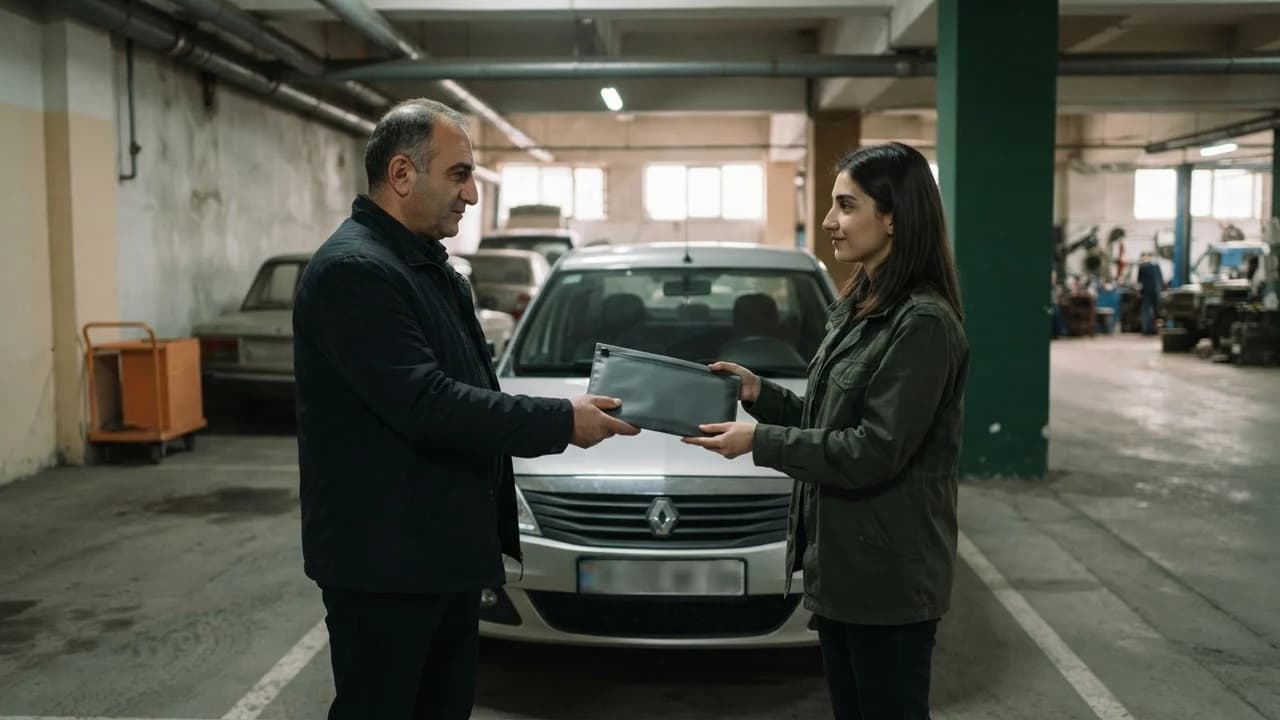

Rental car parking sensors and assist systems explained
Parking sensors and driver-assist systems help — but they don't guarantee anything. We explain their limits and show exactly what to check when you pick up the car.
6 min read
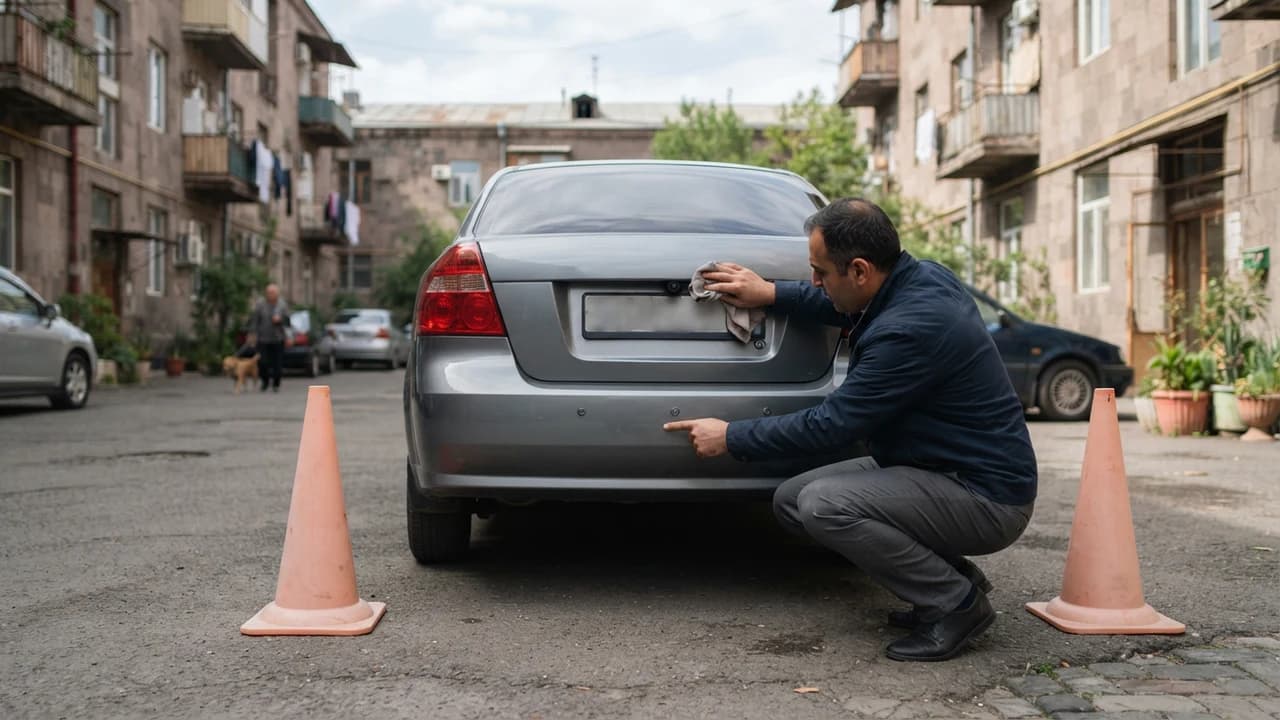
In this article
Parking sensors and assist systems in a rental car are extra support — they don't guarantee a safe park and they don't replace your own observation. Their presence and condition should always be confirmed with the listing and the owner.
What parking sensors and assist systems are
Parking sensors are small ultrasonic devices built into the bumpers that measure the distance to an obstacle and signal it — usually with sound or a display graphic. The closer you get to a wall or another car, the faster the signal becomes.
Assist systems are a broader group. They include the rear camera, which shows an image from behind the car; the parking alert, which warns of an approaching obstacle; and automatic emergency braking (AEB), which can brake on its own if a collision looks imminent.
Which of these a car has depends on its model, year and trim level. That's exactly why on a peer-to-peer platform like JanCar, where cars belong to independent owners, precise questions go to the listing and the owner — not the platform.
What these systems don't guarantee
No sensor and no camera guarantees a scratch-free parking job. These systems only see what physically reaches their sensors, and they always have a delay. The audible warning often sounds at the moment there's already little room left to brake.
Road traffic rules in the Republic of Armenia place a constant observation duty on the driver, regardless of the car's technical equipment (checked on roadpolice.am, June 2025). Technology grants no legal privilege.
UNECE vehicle regulations (such as R151 and R159) also define these systems' limitations and mandatory warnings, making clear that the final decision stays with the driver (checked on unece.org, June 2025).
Field-of-view and detection limits
Every system has blind spots. Ultrasonic sensors see low, thin objects poorly: a bollard stone, a slim post, a small child's item, a chain-link fence. The rear camera image is wide-angle and distorts distance — things look farther away than they really are.
In Yerevan's narrow courtyards and the tight rows of paid parking zones, it's precisely those low, thin objects that cause most damage. The sensor stays silent while the bumper meets the stone.
Why technology doesn't replace driver attention
Assist systems are designed as support, not replacement. The system doesn't know what's happening at your sides, doesn't read a pedestrian's intentions, and can't decide whether it's worth entering that space at all. Judging that is the driver's job.
The practical rule is simple: listen to the signal, but make the decision with your mirrors, your windows and — when needed — by getting out and looking. A slow maneuver is always cheaper than a repair.
Dirt, weather and model differences
Dirty or snow-covered sensors misbehave, because ultrasound can't pass freely through a layer of grime. In heavy snow or slush, a sensor may stay completely silent — or beep constantly with no real obstacle anywhere near.
The camera suffers too: a thin film of mud or ice on the lens makes the image useless. Rain and fog reduce picture clarity, and some AEB versions recognize objects poorly in poor visibility.
Depending on the model, the set of systems and their logic differ: one car's camera has moving guide lines, another's shows a static image, and a third has only sensors. That's why every rental starts from zero — with getting acquainted with that specific car.
Step-by-step checklist for pickup
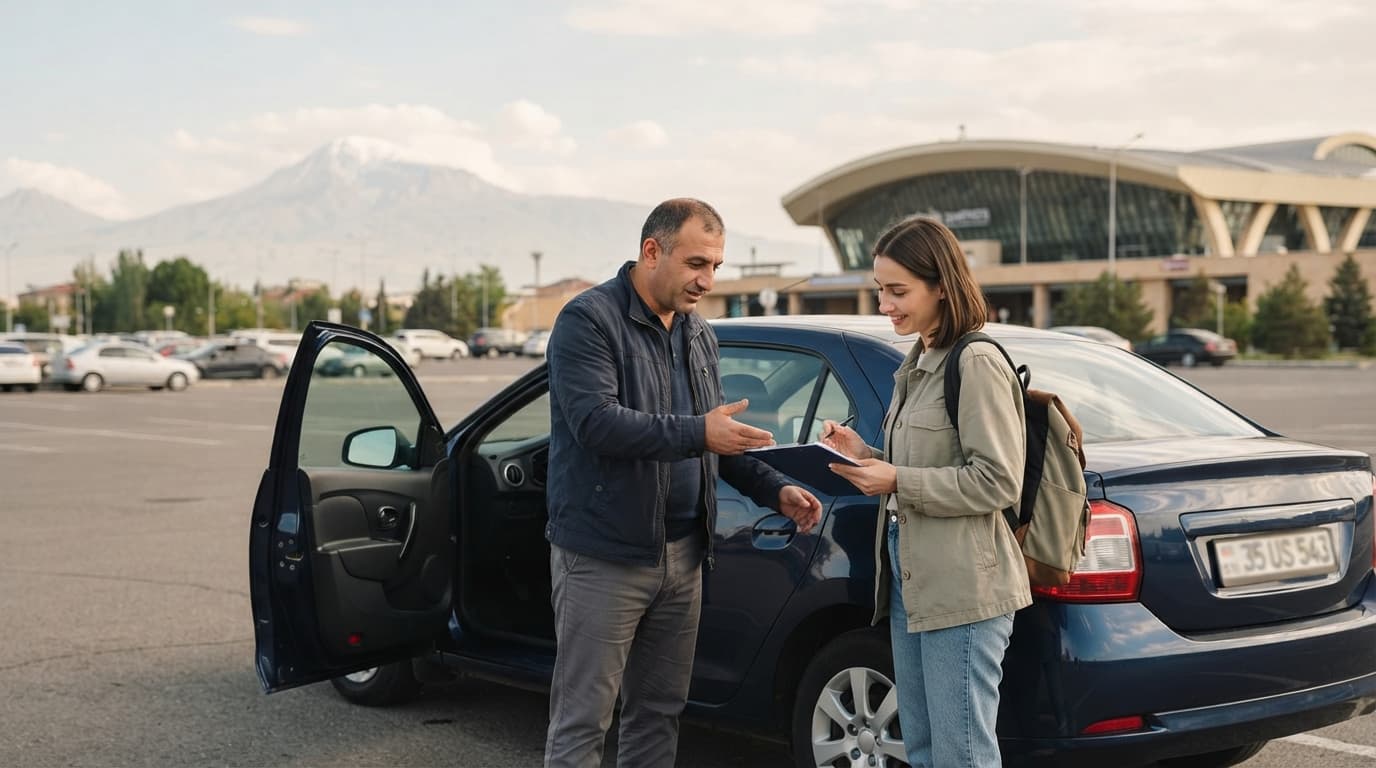
At pickup, 60–90 seconds is enough to confirm the assist systems actually work. Here's a simple sequence:
- Confirm with the listing and the owner which systems are fitted: sensors, camera, alert, AEB.
- Engage parking mode and bring your hand close to a rear sensor — the signal should respond.
- Check the camera feed: is the lens clean, is the image stable, do the guide lines point the right way?
- Test the audible warning's volume: can you hear it over music?
- If sensors are dirty or snow-covered, ask the owner to clean them in front of you.
- Record the result in a handover act or checklist: what worked, what didn't, where existing damage is located.
That last point matters especially in P2P rentals. If a dispute later arises over whether "the sensor was working," a documented result plus both parties' signatures settles it without guesswork.
What to confirm in advance, and what JanCar does
JanCar is a connecting platform: the cars belong to independent owners, and each car's systems, price, security deposit, insurance and handover terms are set by the owner in the listing. JanCar does not receive or hold a deposit — if a listing requires one, it's arranged directly between renter and owner.
The advance-questions list is short: which assist systems are installed, whether they have known issues, what the insurance covers in case of damage, and what the contract says about responsibility for the equipment. Never assume insurance coverage — ask to see the active policy and read the relevant clause.
A working system doesn't remove the driver's responsibility: after a crash, coverage depends on the listing terms and the insurance policy, not on whether the warning "failed on its own." If you discover mid-trip that a system isn't responding, tell the owner and drive as if the system didn't exist at all.
Frequently asked questions
Do parking sensors replace mirrors and the driver's own observation?
No. Sensors are an extra signal, not a replacement. Under road traffic rules, observation is the driver's duty, and these systems have blind spots and delays. Maneuver slowly, use your mirrors and, when needed, get out and look.
Why do sensors misbehave in snow or dirt?
Ultrasound physically cannot pass through a layer of dirt, snow or ice, so the sensor either goes silent or gives false alarms. In winter and dirty weather, check that the sensors and camera lens are clean before trusting them.
Who's responsible if the sensor worked but damage still occurred?
Responsibility stays with the driver: a functioning system doesn't cancel accountability for the maneuver. Financial coverage for damage depends on the listing terms and the insurance, both of which should be confirmed with the owner in advance.
Related reading
Continue with these verified related guides.
This is general information. JanCar does not receive or hold a vehicle deposit. Check price, deposit, insurance and every other term on the listing and directly with the owner.
More JanCar guides
Continue with these closely related practical guides.
Frequently asked questions
Do parking sensors replace mirrors and the driver's own observation?
No. Sensors are an extra signal, not a replacement. Under road traffic rules, observation is the driver's duty, and these systems have blind spots and delays. Maneuver slowly, use your mirrors and, when needed, get out and look.
Why do sensors misbehave in snow or dirt?
Ultrasound physically cannot pass through a layer of dirt, snow or ice, so the sensor either goes silent or gives false alarms. In winter and dirty weather, check that the sensors and camera lens are clean before trusting them.
Who's responsible if the sensor worked but damage still occurred?
Responsibility stays with the driver: a functioning system doesn't cancel accountability for the maneuver. Financial coverage for damage depends on the listing terms and the insurance, both of which should be confirmed with the owner in advance.
Sources
- JanCar — how it works
jancar.am · official source
- JanCar car catalogue
jancar.am · official source