
Buffer Time Between Car Rentals
The buffer between rentals isn't one number. It depends on delays, inspection, cleaning and refuelling. Here's what to clarify with the host.
7 min read
In this article
The buffer between rentals isn't one number. It depends on delays, inspection, cleaning and refuelling. Here's what to clarify with the host.
Key takeaways
Five factors decide how much buffer time you need between rentals: possible return delay, inspection and damage documentation, cleaning, charging or refuelling, and the next handover location. There is no universal number — and no platform can "assign" one.
JanCar is a connecting marketplace: the car, price, deposit, insurance and handover window are set by the owner in the listing and contract. JanCar does not receive or hold a deposit. So the exact buffer window comes from the listing and a direct conversation with the owner.
What is buffer time, and why there's no single right number
Buffer time is the free time left between the end of one rental and the start of the next rental — or whatever else the owner has planned. It protects both sides: the renter doesn't become "late" over a route delay, and the owner has time to prepare the car for the next handover.
Plenty of guides suggest one "safe" hour. That won't work, because the buffer length is the sum of several variables:
- Return delay — route length, traffic jams, unexpected stops.
- Inspection and documentation — photos, damage diagram, handover act.
- Cleaning — is the car returned clean, or not?
- Charging or fuel — charging an EV takes time.
- Next handover location — airport, city centre, another town.
Each point is its own question to be answered in the specific listing.
Which factors stretch the buffer
Below we look at the practical impact of each variable — without imposed time figures that won't match your situation anyway.
Return delay and route
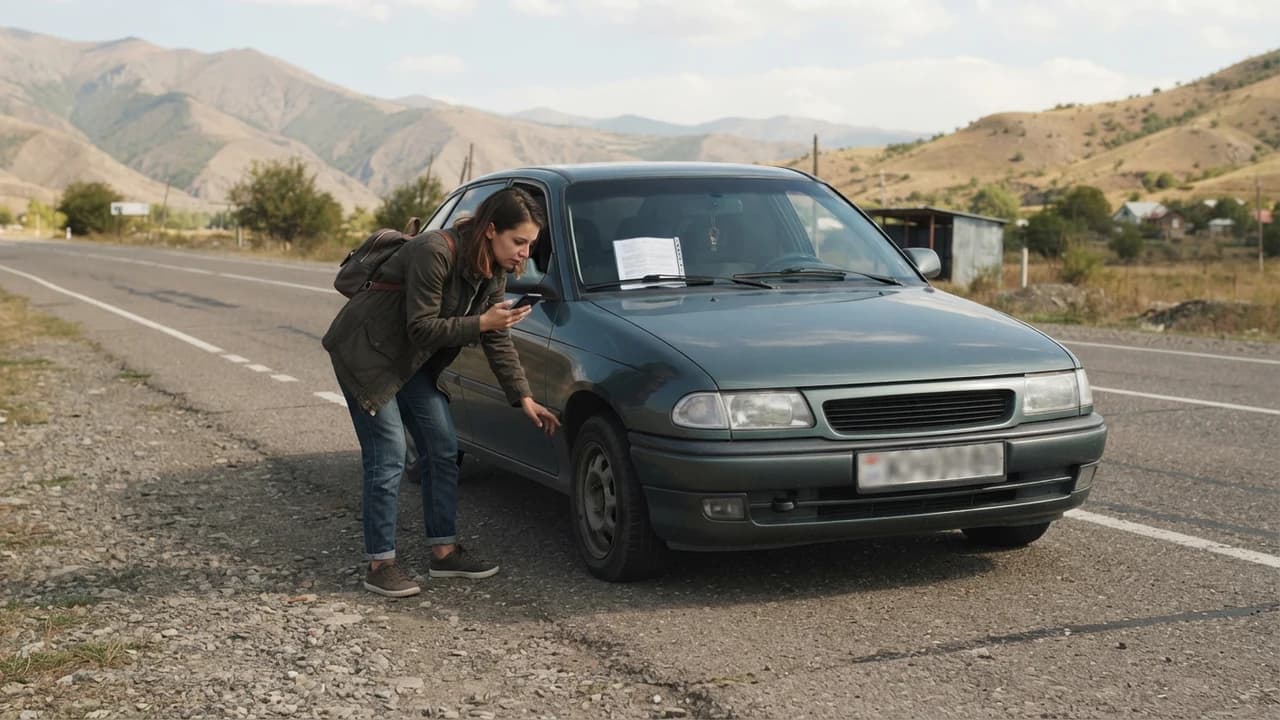
If you're returning on a long route — say Yerevan–Sevan — the buffer needs to cover the unpredictable part of the road. Traffic, roadworks and weather all change travel time. Check current road conditions with official Traffic Police sources (roadpolice.am, checked on the day, before your trip). Route planning is the single biggest consumer of your buffer.
Inspection and damage documentation
At return, both sides need enough time to inspect the car. Optional but useful steps include pickup and return photos, recording the fuel level, an existing-damage diagram, and a handover act signed by both sides. These steps take time, so build them into the buffer rather than doing them "on the fly".
Cleaning
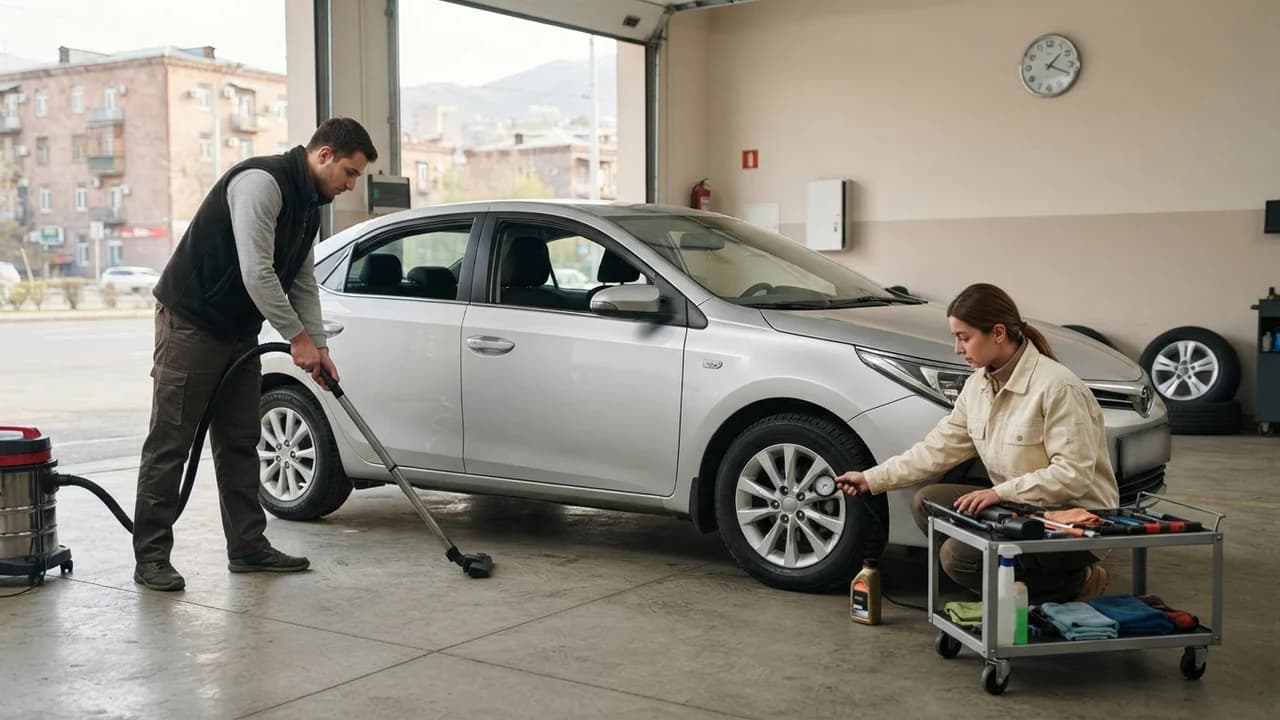
Ask the owner: is the car returned clean, or is cleaning done after handover? If it's your responsibility, the queue at the car wash can be long — especially on a Monday morning. That's part of the buffer, not spare time.
Charging or fuel
Filling up at a petrol station is quick; charging an EV is not. Charger availability and capacity vary, so when renting an electric car your buffer should cover not just the charge itself but also finding a free station. Check the network's current state on the rental day.
Next handover location
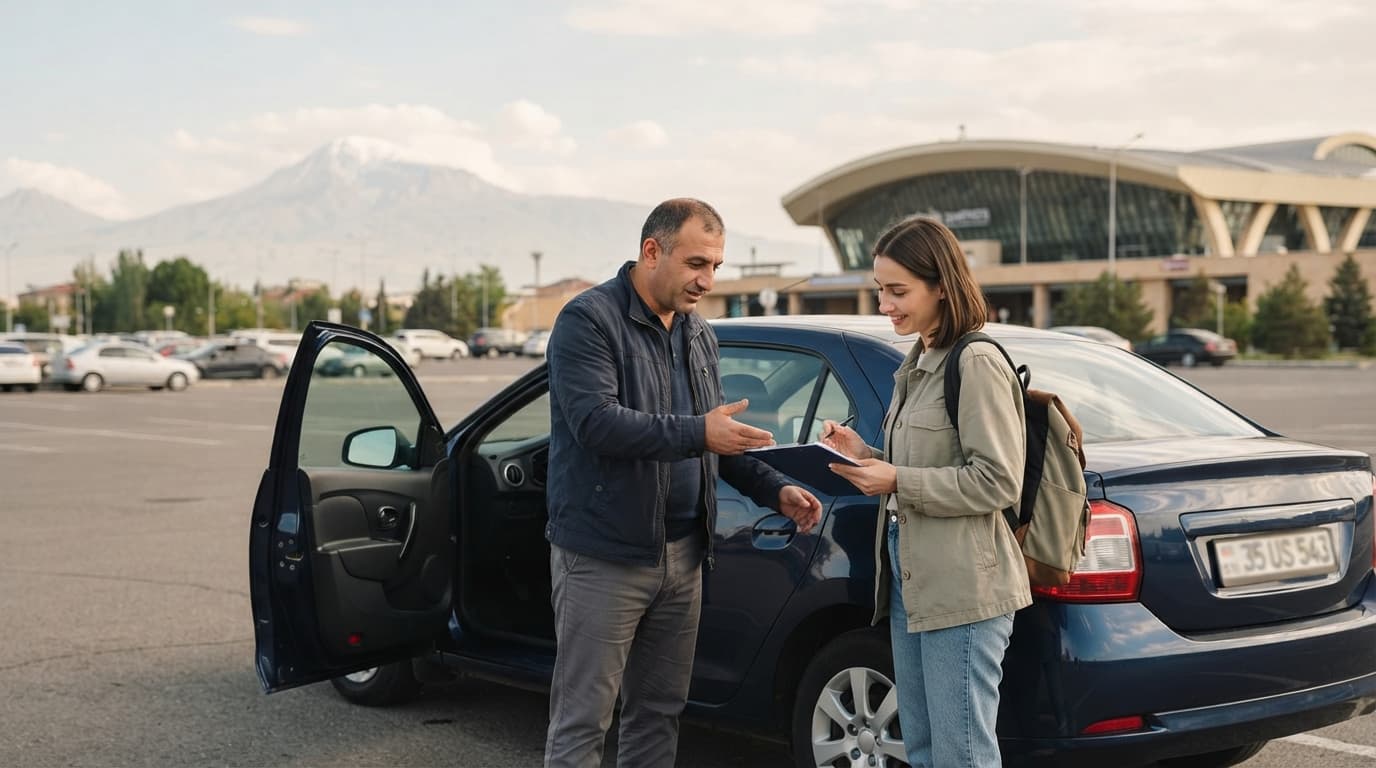
The handover location changes everything. Getting to the airport, hunting for parking downtown, or driving the car to another town each take different amounts of time. If the owner collects the car themselves, ask where and when they'll arrive, and whether their arrival depends on your exact timing.
Step-by-step checklist for planning your buffer
This checklist works for both renter and owner. Run through it before the return day.
- Read the listing: note what it says about the handover window, fuel and cleanliness.
- Confirm the route: check road conditions from an official source on the return day.
- Plan the charging/fuel step: for an EV, pick the station in advance.
- Schedule the inspection: photos, diagram, handover act, signatures.
- Add a cushion: build in time for the unexpected instead of handing over "at the last minute".
- Communicate changes: if you're running late, tell the owner as early as possible.
Common mistakes and main risks
The most common mistake is shrinking the buffer to zero: the renter plans the return to land exactly on the handover time. Any traffic jam or slow inspection turns into a delay. The second mistake is the silent delay — when the owner doesn't know what's happening, they can't shift the next handover.
The consequences of a late return are set by the owner in the contract: it could be a corresponding fee or a cancelled booking for the next renter. JanCar doesn't set or hold such fees — the rule is written into the listing, so read it before booking.
The third risk is missing documentation. Without photos and a handover act, a dispute about damage or fuel level is hard to resolve. Time planning and paperwork protect you together.
What to confirm with the owner in advance
Before booking, confirm five points from the listing and by asking the owner directly ("host", meaning the car's owner).
What to confirm
Why
The handover window
Determines how much free time you have after returning
The deposit
The owner may state a fixed deposit; it's arranged directly — JanCar doesn't hold it
Fuel/charge condition
Makes clear whether refuelling eats into your time
MTPL insurance
Ask to see the active policy; don't assume the coverage
Handover location
Airport, centre or another town — different time costs
If the window feels too tight, there are two safe options: ask for a wider window, or move the handover to another time. Agreeing on a change is always easier than explaining a delay.
Frequently asked questions
How long does handing back the car take?
There's no universal figure. It depends on the inspection, cleaning, charging or refuelling, and the handover location. The exact window is stated in the listing and confirmed with the owner.
What should I do if I'm running late returning the car?
Tell the owner immediately and agree on a new time. The consequences of a late return (such as a fee) are set by the contract, not by the platform. Silence only increases the risk.
Is the buffer different for an electric car?
Yes, usually longer. Charging and finding a free station both take time, and charger availability varies. Check the stations' current status on the rental day and include the charging step in your buffer.
Related reading
Continue the topic with these vetted related guides.
This is general information. JanCar does not receive or hold a vehicle deposit. Check price, deposit, insurance and every other term on the listing and directly with the owner.
More JanCar guides
Continue with these closely related practical guides.
Frequently asked questions
How long does handing back the car take?
There's no universal figure. It depends on the inspection, cleaning, charging or refuelling, and the handover location. The exact window is stated in the listing and confirmed with the owner.
What should I do if I'm running late returning the car?
Tell the owner immediately and agree on a new time. The consequences of a late return (such as a fee) are set by the contract, not by the platform. Silence only increases the risk.
Is the buffer different for an electric car?
Yes, usually longer. Charging and finding a free station both take time, and charger availability varies. Check the stations' current status on the rental day and include the charging step in your buffer.
Where to go next
- Renting a Car With a Driver: Agreeing Working Hours and Waiting Time
- One-Way Trip Between Cities With a Driver: When It Beats a One-Way Rental
- Wedding Car Convoy Planning: How Many Cars, Which Route, How Much Time
- Left Something in a Rental Car? Here's What to Do
Sources
- JanCar — how it works
jancar.am · official source
- JanCar car catalogue
jancar.am · official source