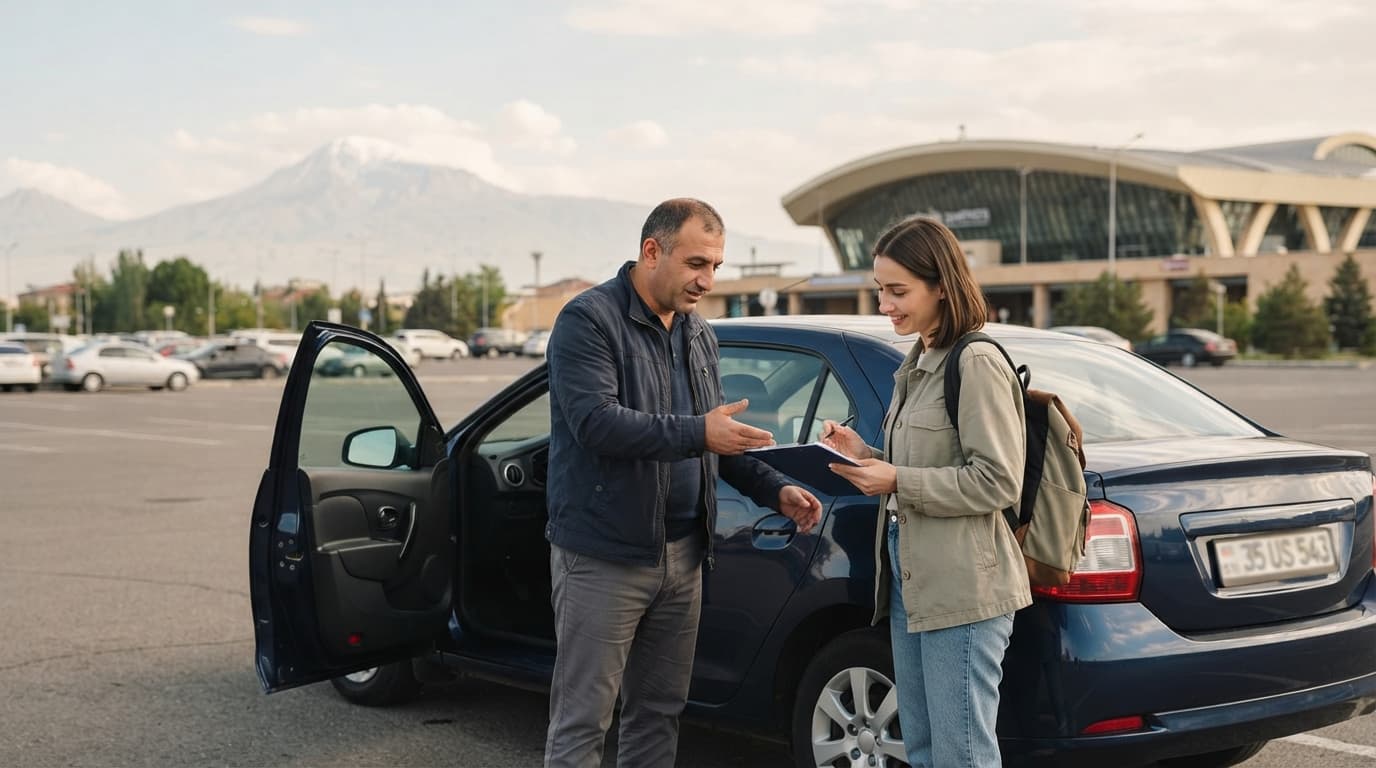

Checking Lights and Wipers on a Rental Car
Before driving off in a rental car, spend about five minutes testing the lights and wipers while the car is still parked. A step-by-step checklist.
7 min read
In this article
Before driving off in a rental car, spend roughly five minutes testing all the lights and the wipers — while the car is still parked. Check the low beams, high beams, turn signals, hazard lights, brake lights, tail lights and, if fitted, the fog lights.
Key takeaways
Checking the lights and wipers on a rental car happens at handover, with the car parked, before your route begins. It takes about five minutes and prevents "surprises" that otherwise show up on a night road, in the rain or during a police stop.
Here's what gets checked:
- low and high beams,
- turn signals (all four corners),
- hazard lights,
- brake lights,
- tail lights,
- fog lights, if the car has them,
- all wiper speeds,
- washer spray pressure and fluid level,
- windscreen demisting.
JanCar is a connecting platform: the car's condition, terms, insurance and how any deposit is arranged are decided by the owner, per the listing and the rental agreement. JanCar does not receive or hold a deposit and does not guarantee repairs.
Why check while the car is still parked
The parked-car check is the best moment, because the problem can still be solved together with the owner. If a light doesn't come on or the wipers don't work, you're still there — you can switch cars, sign for another date or agree on a repair.
On the road it's already too late. At night outside Yerevan — say, on the road to Sevan — a dead light is a danger, and dead wipers in the rain an even bigger one. Beyond safety, Armenia's road traffic rules require correct use of lights, and a faulty light can become grounds for a roadside stop. Check the current text of the rules against official sources: the roadpolice.am website or the arlis.am legal-acts database (checked 2025).
Lights check, step by step
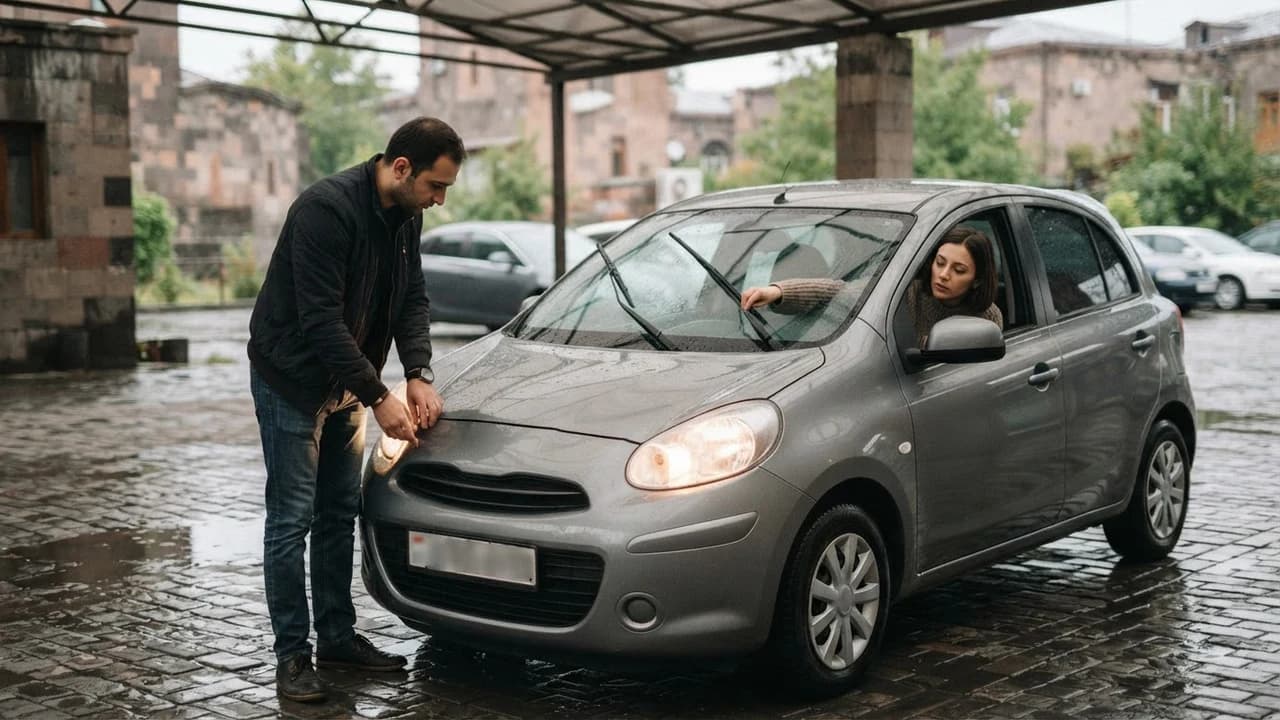
Run through the lights in the same order every time you rent a car. Turn the key, keep the car parked, walk around it and look at each light individually.
- Low beam. Switch the lights on and walk around the front: both headlights should glow evenly.
- High beam. Flip to high beam and look again from the front: the character of the light should change.
- Turn signals. Left, then right. Walk around the car and check all four indicators, front and rear.
- Hazard lights. Press the hazard button: all six indicators should flash together.
- Tail lights. With the low beams on, go to the back: both tail lights should be lit.
- Fog lights. If the car has them, switch them on and confirm they work.
At the same time, watch the dashboard. If an unfamiliar warning symbol appears after switching the lights on, don't guess — ask the owner.
How to check brake lights alone
The simplest one-person trick for brake lights is the "mirror" method using a rear window or wall. Park the car near glass doors or a flat wall where you can see the rear of the car reflected, press the brake pedal with your foot and watch the reflection: the red light should appear on both sides.
No wall? Use your phone. Set it recording near the rear window, press the brake, then watch the video. Third option: ask the owner or whoever came along to stand behind the car. At handover this is a perfectly normal request, not a sign of distrust.
Wipers and demisting: what to test
The wiper check starts with the speeds. Try the first, second and intermittent settings and make sure the blades move smoothly, without noise and without skipping streaks. Don't run them long on dry glass — a few passes is enough.
Next, the washer system. Press the washer button and see whether fluid sprays onto the glass. If nothing comes out, the reservoir is probably empty — that's the moment to ask where it is and who fills it. In winter and early spring, also ask whether the fluid is freeze-resistant.
Finally, test the demisting. Turn the fan towards the windscreen and confirm air actually reaches the front glass. A fogged-up screen is dangerous in the morning or in rain, and spotting the problem on the spot is far easier than discovering it mid-route.
Unfamiliar symbols: what to ask the owner
Every dashboard is different, and an unfamiliar symbol doesn't always mean trouble. So at handover, ask the owner — the host — directly which symbols are normal for this model and which call for immediate attention.
A short list of useful questions:
- Which symbols light up at startup and then switch off? That's the normal self-check.
- Which symbol means I should stop immediately and call you?
- How do I switch on the fog lights and high beams with these controls?
We — the JanCar editorial team — recommend asking these questions right at handover, not by phone an hour later. The owner knows their own car, and five minutes of explanation saves hours.
Common mistakes and risks
The most common mistake is skipping the brake lights, because the driver can't see them from inside. A dead brake light gives the car behind no warning — and at night it's a direct risk.
The second mistake is assuming there's washer fluid. On a dusty road or in the rain, an empty reservoir turns into blind driving. The third is ignoring a fogged screen: many people start wiping it with their hand while already moving — the worst moment to discover the fan doesn't work.
The fourth risk is having no documentation. If you spot a problem at handover, note it and photograph it — the same habit as recording the fuel level and sketching existing damage. These steps aren't mandatory, but in a dispute they're your strongest evidence.
If a problem is found: the next step
When you find a problem, the first step is agreeing on it with the owner before you set off. Describe the issue, photograph it, and decide together: repair, a different car, a different date, or adjusted terms in the rental agreement.
If the problem affects safety — a dead light, wipers or demisting — and no solution turns up, there's only one safe answer: don't go, especially not at night or in bad weather. No route is worth a faulty car.
Remember the boundary: JanCar connects renter and owner, but the car's condition, repairs, direct deposit arrangements and terms are decided by the listing, the owner and the agreement. Check price, mileage, fuel, insurance and pickup/return location on the listing and directly with the owner.
Frequently asked questions
What if a light on my rental car stops working while I'm already on the road?
Pull over somewhere safe and call the owner — often the cause is simple, like a burnt-out bulb. Don't continue a night route without working lights; that's a direct safety violation.
Does the owner fill the washer fluid?
That's decided by the listing and your arrangement — there's no general rule. Ask at handover where the reservoir is and who's responsible for filling it.
Is JanCar responsible for a car's faults?
No. JanCar is a connecting platform: it doesn't own cars, doesn't hold deposits and doesn't guarantee repairs. Responsibility for the car's condition and terms lies with the owner, per the listing and the agreement.
Related search paths
Continue the topic with these vetted related guides.
This is general information. JanCar does not receive or hold a vehicle deposit. Check price, deposit, insurance and every other term on the listing and directly with the owner.
More JanCar guides
Continue with these closely related practical guides.
Frequently asked questions
What if a light on my rental car stops working while I'm already on the road?
Pull over somewhere safe and call the owner — often the cause is simple, like a burnt-out bulb. Don't continue a night route without working lights; that's a direct safety violation.
Does the owner fill the washer fluid?
That's decided by the listing and your arrangement — there's no general rule. Ask at handover where the reservoir is and who's responsible for filling it.
Is JanCar responsible for a car's faults?
No. JanCar is a connecting platform: it doesn't own cars, doesn't hold deposits and doesn't guarantee repairs. Responsibility for the car's condition and terms lies with the owner, per the listing and the agreement.
Where to go next
Sources
- JanCar — how it works
jancar.am · official source
- JanCar car catalogue
jancar.am · official source