
Driver Fatigue on Mountain Roads: A Practical Guide
Fatigue on a mountain road is managed in advance — with a rest-stop plan, early recognition of the signs and timely breaks, not willpower.
7 min read
In this article
Fatigue on a mountain road is managed in advance — with a rest-stop plan, early recognition of the signs and timely breaks, not willpower.
You manage driver fatigue on a mountain route in three steps: plan your rest stops before you set off, learn to recognize the early warning signs, and decide to stop driving when they appear. Willpower and the "just a bit further" mindset don't work here. This page gives you a practical checklist built for Armenia's mountain roads.
Why mountain roads tire you faster
A mountain route wears you out faster because you're managing altitude, long climbs, narrow shoulders and shifting weather all at once. At higher elevations the air is thinner and the engine has less power, which forces more careful driving. Every sharp bend and every merge demands concentration — and concentration is fuel, just for the driver.
Practical factors pile on too. On slopes the shoulder is often narrow or missing entirely, fog and rain can roll in within minutes, and distances between settlements are long. That means a plan for the lake Sevan or Selim Pass route needs more breaks than a drive across flatland.
The warning signs: what to notice while driving
You can spot fatigue yourself without any medical diagnosis: repeated lapses in attention, heavy eyes, "forgetting" turns, erratic speed fluctuations and drifting out of your lane. If you've noticed even one of these signs over the last few dozen kilometers, that's already a signal.
- Heavy eyelids or a glazed stare fixed on the road.
- "Missing" kilometers — you can't remember how you got through the last bend.
- Slow reactions — braking late or signaling a turn late.
- Irritability and agitation over trivial situations.
- Your head "nodding" or brief micro-sleeps, even second-long ones.
This list isn't medical advice; it's a simple driver self-check rule. One sign means think about stopping. Two mean stop.
When to stop driving
Pull over immediately if you notice two of the signs above at once, or any single one recurring. The most dangerous mistake is trying to "fight through" fatigue with loud music, coffee or an open window. Those only push the problem a few kilometers down the road.
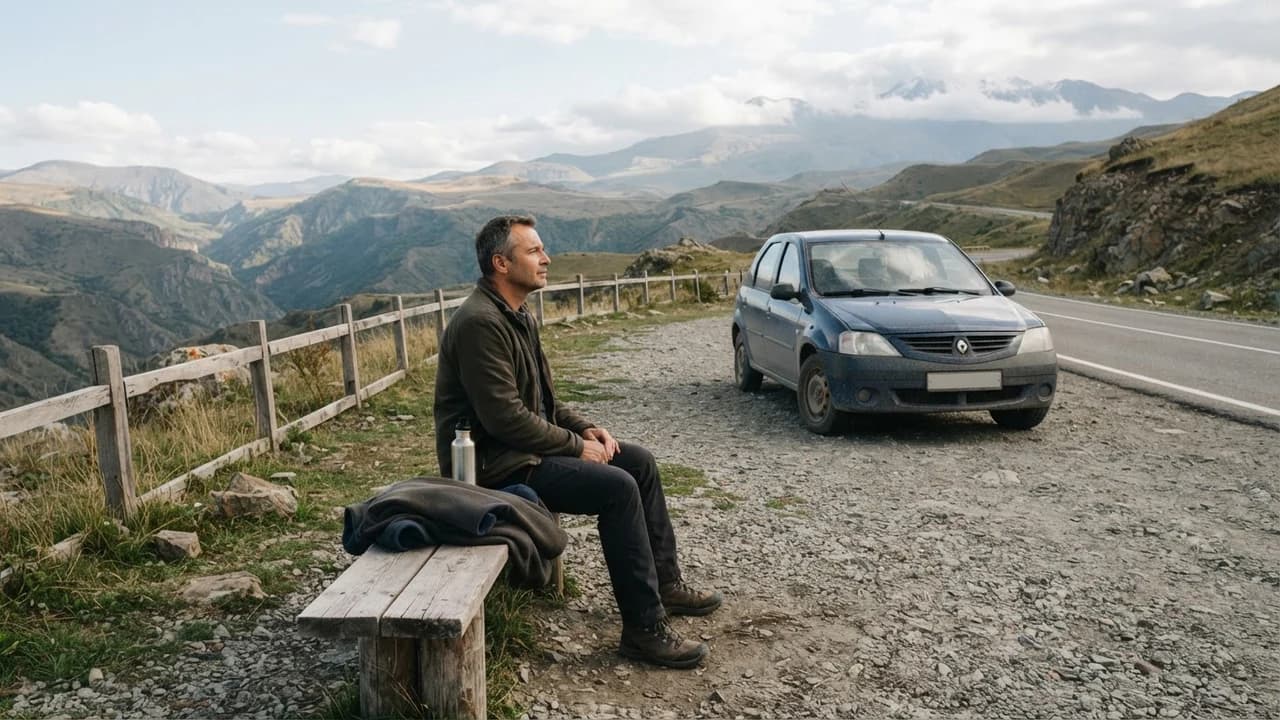
You have three safe alternatives. First: stop and take a real 15–20 minute break — walk around, drink water. Second: swap drivers, if you have a companion who's confident with the car and the route. Third: postpone the trip or overnight in a nearby settlement. No schedule is worth more than lost attention on a mountain road.
Planning rest stops in advance: step by step
Plan your stops before departure by marking a rest point on the route map for every 1.5–2 hours of driving. For example, on a Yerevan–Sevan trip that might be one break en route and another at the shore; crossing Selim Pass calls for separate points before the climb and after the pass.
Where to stop legally and safely
A legal, safe stop is a designated parking area, a marked rest zone, or a wide, hard shoulder clear of the roadway, well visible and level. Armenia's road traffic rules do not allow stopping at bends with limited visibility, at pass summits or on narrow shoulders. Check the current text of the rules via official sources — arlis.am or roadpolice.am — since wording can be updated.
When choosing a stop, apply three criteria. One: the car is fully off the roadway. Two: other drivers can see you from a distance, and you can see approaching traffic. Three: the ground is hard and level, with no ditch or slope under the wheels. If any one is missing, keep going until the next suitable spot.
Pre-departure checklist
Fill out this checklist the evening before departure, without rushing. It covers sleep, route, stops and the condition of the car.
- Sleep: at least 7–8 hours the night before; no late-night departures.
- Timing: leave in the morning so the final stretch doesn't fall deep into night.
- Route: points marked on the map for every 1.5–2 hours.
- Weather: check the mountain-section forecast on hydromet.am on departure day, watching for fog and rain windows.
- Car: tires, brakes, lights, coolant — for a rental, verify the condition recorded in the handover act.
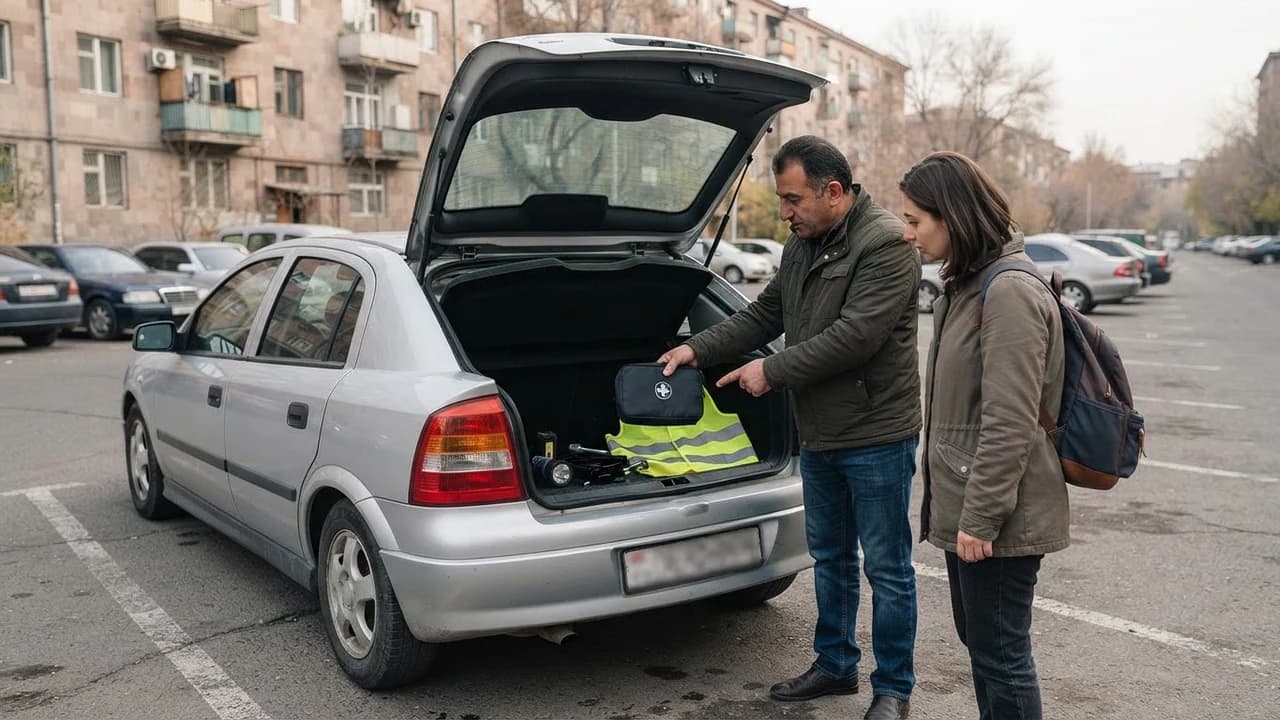
- Emergency: phone charged, Rescue Service 911/112 numbers accessible.
If any item on the list fails, delay departure. A mountain route forgives lateness, but not an incomplete plan.
Commonly forgotten mistakes and risks
The three most common mistakes are the "just a little further" decision, stopping on a narrow shoulder, and ignoring the weather window. Each has a simple counter-move.
- "Just a bit further": decide in advance that two signs mean stop — no negotiating with yourself.
- Wrong stop: never park at a blind bend or on a pass summit, even "for just a minute."
- Weather window: mountain fog often follows a daily rhythm; check the forecast and plan the crossing during a clear period.
Fuel planning is a separate risk. Gas stations are scarce in mountain sections, so map out refueling points along the route before you leave.
JanCar's role and what to confirm with the owner
JanCar is a connecting platform between independent owners' listings and renters, and it does not set the terms of any car. Price, availability, mileage, fuel, insurance and pickup/return location must always be checked on the listing and directly with the owner ("host").
On deposits the rule is clear: JanCar does not receive, block or hold a security deposit. If an owner states a fixed deposit on the listing, it's arranged directly between renter and owner, without platform involvement.
Before a mountain route, confirm three things. One: the car's condition — tires, brakes, lights. Two: that an insurance policy exists and what its terms are — no assumptions. Three: the handover act. We recommend photographing the car at pickup and return, recording the fuel level, sketching existing damage and signing a digital handover act with both parties. None of this is mandatory, but it reduces disputes.
If a breakdown or difficult situation arises on the road, the first step is to bring the car to a safe stop and notify the owner.
Frequently asked questions
How often should I take a break on a mountain road?
The practical rule is 15–20 minutes of rest for every 1.5–2 hours of driving. On high-altitude or demanding stretches you can shorten the interval. This is guidance, not a legal requirement.
Can I stop at the top of a pass for photos?
Only if there's a designated parking area or a wide, safe platform off the roadway. Stopping at bends with limited visibility or on narrow shoulders is dangerous and prohibited by traffic rules.
What if fatigue hits me mid-route?
Stop at the nearest legal spot, rest 15–20 minutes, switch drivers if needed, or postpone the trip. Pushing on "by force" is the most dangerous option.
Related reading
Continue the topic with these vetted related guides.
This is general information. JanCar does not receive or hold a vehicle deposit. Check price, deposit, insurance and every other term on the listing and directly with the owner.
More JanCar guides
Continue with these closely related practical guides.
Frequently asked questions
How often should I take a break on a mountain road?
The practical rule is 15–20 minutes of rest for every 1.5–2 hours of driving. On high-altitude or demanding stretches you can shorten the interval. This is guidance, not a legal requirement.
Can I stop at the top of a pass for photos?
Only if there's a designated parking area or a wide, safe platform off the roadway. Stopping at bends with limited visibility or on narrow shoulders is dangerous and prohibited by traffic rules.
What if fatigue hits me mid-route?
Stop at the nearest legal spot, rest 15–20 minutes, switch drivers if needed, or postpone the trip. Pushing on "by force" is the most dangerous option.
Where to go next
Sources
- JanCar — how it works
jancar.am · official source
- JanCar car catalogue
jancar.am · official source