
Checking a Rental Car's Fuel Type: 4 Steps
You can't guess a car's fuel type. Compare the contract, the owner's message, the filler-cap label and the dashboard — wrong fuel can seriously damage the engine.
8 min read
In this article
You can't guess a car's fuel type. Compare the contract, the owner's message, the filler-cap label and the dashboard. Wrong fuel can seriously damage the engine.
Key Takeaways
A rental car's fuel type is checked against four independent sources: the rental contract, the owner's message or listing, the label inside the fuel-filler flap, and the dashboard indicator. If the sources contradict each other, confirm with the owner before putting anything in the tank.
- Never guess the octane rating (AI-92, AI-95) or engine type from the brand name or "common knowledge."
- The most trustworthy source is on the car itself: the label inside the fuel-filler flap.
- At pickup, record the fuel type in the handover act, signed by both sides.
- For LPG/CNG conversions, the owner must confirm which system is primary.
- JanCar is a connecting platform. Fuel data comes from the listing and the owner — not from any platform guarantee.
Why Guessing the Fuel Type Is Dangerous
Wrong fuel is one of the most expensive mistakes you can make during a rental, because repairs usually fall on the renter under the rental contract and its deposit terms. The worst scenario is petrol in a diesel engine — it can damage the fuel system and the engine before you even notice anything is wrong.
Diesel in a petrol car is usually spotted faster: the car won't start or breaks down immediately. But repair costs here can still be significant, and nobody can quote an exact figure up front — it depends on the vehicle and the extent of the damage.
Wrong Octane Rating
If the engine is designed for AI-95 and you fill it with AI-92, the car won't usually break down right away. But you may get power loss, knocking sounds and long-term strain on the engine. The reverse (95 instead of 92) typically causes no damage — though it's money spent unnecessarily.
Cars With Gas (LPG/CNG) Systems
Cars with an LPG or CNG system have a separate switch, a gas cylinder — often in the trunk — and a separate filler inlet. As the renter, you need to know which system is primary, where the switch is and how switching works. Only the owner can reliably show you this at pickup.
Where to Check the Fuel Type: 4 Reliable Sources
To determine the fuel type, use four sources and compare them against each other. When at least three agree, you have enough certainty. If not, check with the owner.
Source
Where It Is
What It Shows
Contract
In your documents
Fuel type as a contractual term
Listing / owner's message
On the JanCar platform
The type and octane stated by the owner
Filler-cap label
Inside the fuel-filler flap
Factory data, straight from the car
Dashboard
Gauge cluster or instrument panel
Newer cars: a fuel-type marking
Contract and Owner's Message
The rental contract normally states the fuel type in the vehicle-details section. Read it before signing, not after. On JanCar, the owner also lists the fuel type in the listing — compare it against the contract.
If the listing data is missing or vague ("petrol," no octane), ask the owner in writing through the platform's messaging. A written answer serves as a reference point later.
The Label Inside the Fuel-Filler Flap
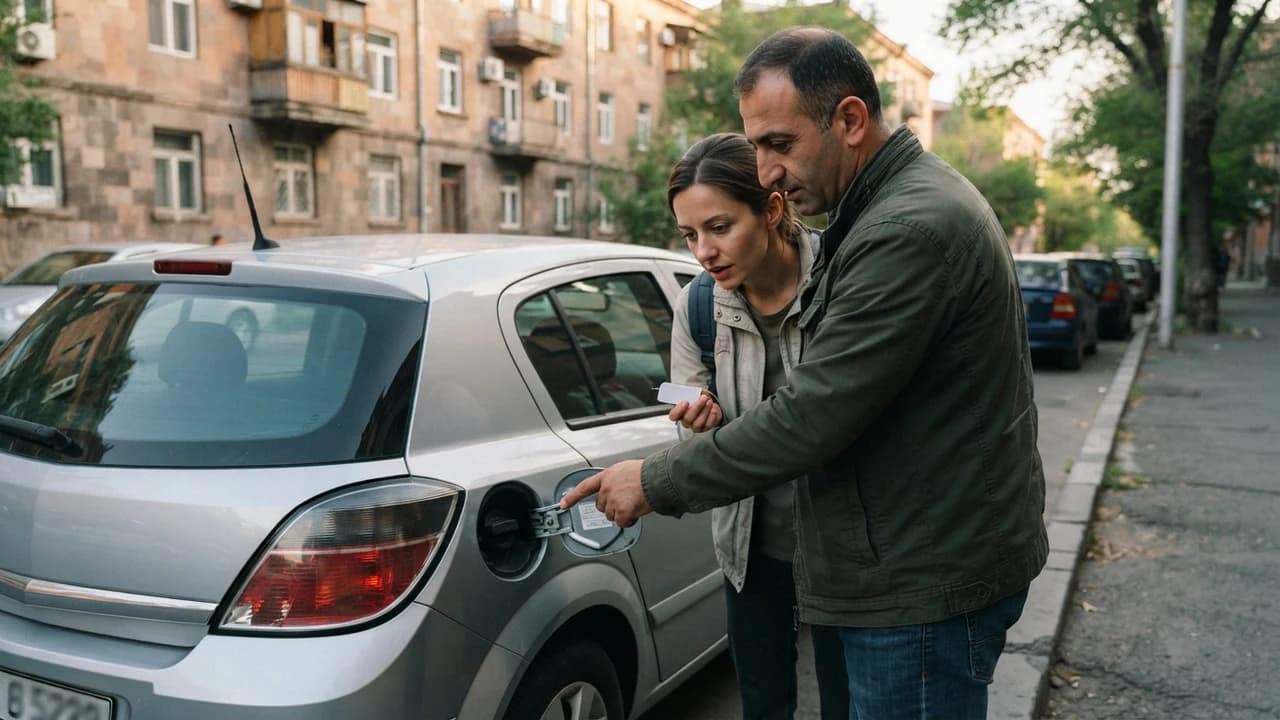
The label inside the fuel-filler flap is the most reliable source available on the car. Open the flap and look at the sticker inside: it will say "Unleaded only," "Diesel" or give the recommended octane rating. This sticker comes from the factory, not from the owner.
One nuance to remember: converted cars may have two inlets. The label covers the petrol system; confirm the gas-system details with the owner as well.
Dashboard and Instrument-Panel Indicators
Many newer cars print "E10," "Unleaded" or a diesel symbol next to the fuel gauge. This is a useful cross-check — but only when it's visible and legible. Older cars often lack this marking entirely.
Step-by-Step Checklist at Pickup
Confirm the fuel type verbally and in writing at pickup — before the first fill-up. The sequence below takes a few minutes but saves you from the most expensive mistake.
- Open the fuel-filler flap and read the inner label with the owner present.
- Compare the label against the contract and the JanCar listing.
- Ask the owner to confirm out loud: the type, the octane, and whether there's a gas system.
- For a gas-powered car, ask them to show you the switch and the gas filler inlet.
- Note the fuel type and current level in the handover act, signed by both sides.
- Photograph the cap label and the fuel gauge on your phone as extra evidence.
These steps complement the general pre-rental inspection — tyres, glass and recording existing damage. Fuel belongs in that same routine.
If the Sources Contradict Each Other
If the contract, the listing, the cap label and the dashboard point to different fuels, put nothing in the tank until the owner confirms the correct option in writing. The priority sources are the factory label in the flap and the owner's written confirmation.
The practical rule is simple: until the contradiction is resolved, the car doesn't go to a station. Ten minutes of waiting costs far less than an engine rebuild. If the owner doesn't respond, resolving the question stays between you and them — the platform doesn't make this call.
JanCar's Role — and Its Limits
JanCar is a peer-to-peer platform that connects a renter with an independent owner; fuel type, price, deposit and insurance are set by the listing, the owner and the contract. The platform doesn't own the vehicles and doesn't guarantee every detail of every listing.
The same applies to the deposit: JanCar does not receive, block or hold it. If the owner has listed a deposit, it's arranged directly between the two of you. So confirming fuel and financial terms is your direct responsibility with the owner.
For changeable data — fuel prices, the filling-station network, octane availability — check on the day, from official sources such as the Armenian government's gov.am portal. This article deliberately quotes no prices: they move, and we'd rather not hand you a stale number.
Frequently Asked Questions
What should I do if I've already filled the wrong fuel?
Don't start the engine and don't drive. Call the owner, describe the situation and get the car to a service point so the tank can be drained. Starting the engine pushes the wrong fuel through the system and multiplies the damage.
Does the wrong octane rating breach anything?
That depends on the contract — some owners list the required octane as a condition. Read the fuel clause before signing and check with the owner if in doubt. The platform sets no rule here.
Who pays for the fuel?
Usually the renter returns the car at the same level they received it, but the exact rule is written in the listing and the contract. At pickup, record the level in the handover act — with a photo and a note.
What should I ask when renting a car with a gas system?
Ask which system is primary, where the gas switch is, how switching between petrol and gas works, where the nearest gas stations are, and whether the cylinder certificate is valid. Ask the owner to demonstrate everything at pickup.
Can I rely on the dashboard indicator alone?
No. The dashboard is a supplementary source, not the main one. The strongest pair is the factory label in the filler flap plus the owner's written confirmation, checked against the contract.
Official Sources
The following sources were used to verify facts in this article.
Related Guides
Continue with these related guides.
- Pre-Rental Car Inspection: Checklist
- Checking MTPL Insurance on a Rental Car: 4 Steps
- Automatic vs Manual: Renting a Car in Armenia
- Traffic Accident in a Rental Car: What to Do, Step by Step
- Driving a Rental Car in Yerevan: Checklist
This is general information. JanCar does not receive or hold a vehicle deposit. Check price, deposit, insurance and every other term on the listing and directly with the owner.
More JanCar guides
Continue with these closely related practical guides.
- Renting a Car With a Pet in Armenia: A Guide
- Checking Your Car for Personal Items Before Rental
- Checking Lights and Wipers on a Rental Car
- Using a Phone While Driving in Armenia: 3 Steps
- Checking Tire Pressure in a Rental Car
- Filling Up a Rental Car in Armenia: 4 Simple Steps
- Adjusting the Seat and Mirrors in a Rental Car
- Fuel Calculation for Armenia Road Trips: Simple Formula
Frequently asked questions
What should I do if I've already filled the wrong fuel?
Don't start the engine and don't drive. Call the owner, describe the situation and get the car to a service point so the tank can be drained. Starting the engine pushes the wrong fuel through the system and multiplies the damage.
Does the wrong octane rating breach anything?
That depends on the contract — some owners list the required octane as a condition. Read the fuel clause before signing and check with the owner if in doubt. The platform sets no rule here.
Who pays for the fuel?
Usually the renter returns the car at the same level they received it, but the exact rule is written in the listing and the contract. At pickup, record the level in the handover act — with a photo and a note.
What should I ask when renting a car with a gas system?
Ask which system is primary, where the gas switch is, how switching between petrol and gas works, where the nearest gas stations are, and whether the cylinder certificate is valid. Ask the owner to demonstrate everything at pickup.
Can I rely on the dashboard indicator alone?
No. The dashboard is a supplementary source, not the main one. The strongest pair is the factory label in the filler flap plus the owner's written confirmation, checked against the contract.
Where to go next
- Checking a Rental Car's MTPL Insurance: 4 Steps
- Checking a Rental Car's Trunk Size
- Checking a Rental Car's Documents at Handover: Registration Certificate, OSAGO and Power of Attorney
- Checking a Rental Car's Documents at Handover: Registration Certificate, OSAGO and Power of Attorney