
Road Signs & Markings in Armenia: A Foreign Driver's Guide
Armenian road signs follow the Vienna Convention style, but 5–6 cases genuinely change your decisions. Colors, markings, priority and a checklist — before you drive.
7 min read
In this article
Armenian road signs and markings mostly follow the international Vienna Convention, but a foreign driver needs to know 5–6 differences that change practical decisions.
This guide doesn't list every sign. It arranges them by "moment of decision" logic — what you see as you approach, what decision you make, and what to do if a sign contradicts the road marking. The information is based on official sources for Armenia's traffic rules (roadpolice.am, arlis.am) and the UNECE description of the Vienna Convention, verified in 2024.
Key Takeaways
- The shapes and colors are familiar to drivers from Europe and post-Soviet countries — triangle, circle, rectangle.
- The priority order is fixed by the traffic rules: temporary regulation beats a permanent sign, a sign beats road marking, marking beats the general rule.
- Place names are written in Armenian, often repeated in Russian and English. If the text is only in Armenian, slow down and rely on the shape of the sign.
- Fine amounts and camera-controlled zones change — check the Road Police's official page before your trip.
- JanCar is a connecting platform: the deposit, insurance and handover terms are set by the owner in the listing, and the platform does not hold the money.
How Armenia's Road Signs Are Organized
Armenia's sign standard is established in its legal act system (arlis.am) and follows the logic of the Vienna Convention on Road Signs and Signals, which Armenia is a party to. That means shape and color already give you half the information, even if you can't read the text.
Warning signs
A white triangle with a red border is an advance warning: a curve, pedestrian crossing, steep descent, animals. The decision is simple — reduce speed before the dangerous section, not inside it. On mountain roads this group matters most; the bends toward Sevan, Dilijan or Aragats arrive without much warning.
Prohibitory and restrictive signs
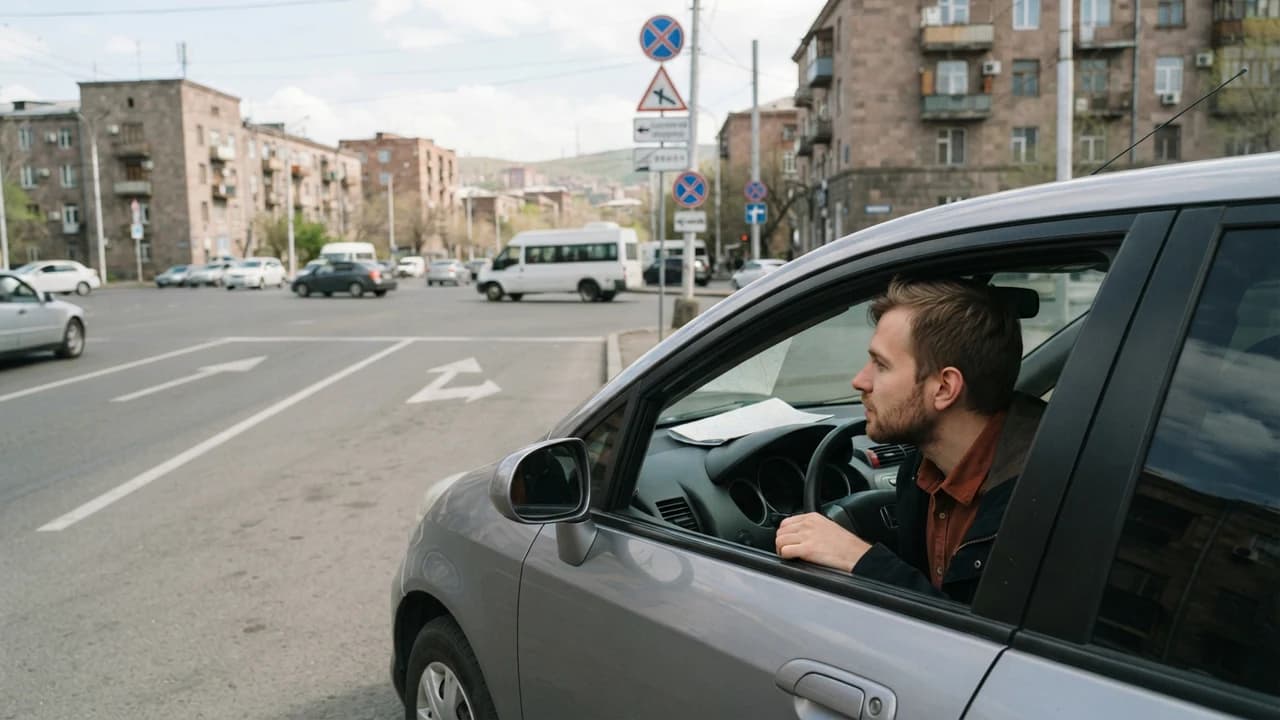
A circle with a red border is a prohibition or restriction — a speed limit, no stopping, no entry. This is the group that generates the most fines, especially in central Yerevan where stopping and parking restrictions are dense. When you see a circular sign, decide two things: the permitted speed, and whether you may stop in this stretch.
Indicatory and informational signs
Blue rectangles and squares show permission and direction — mandatory direction, pedestrian crossing, parking lot, start of a built-up area. Outside cities they're often the only reference point. Place names are written in Armenian, and on main highways they're repeated in Russian and English. If the text is only in Armenian, lean on the shape of the sign and a pre-downloaded map — internet coverage is patchy in the mountains.
What the Colors Mean: Red, Blue, Yellow
Color is a fast-decision tool. It tells you what kind of action is coming before you've read the sign itself.
Color
Where you see it
What decision it changes
Red border
Triangle and circle
Slow down or don't perform the action (prohibition)
Blue
Rectangle, square, circle
Permission or mandatory direction
Yellow / orange
Temporary boards, roadworks
The permanent rule is temporarily suspended
A sign on a yellow background or mounted on a temporary frame always outranks the permanent sign on the post. This is the point foreign drivers most often miss.
Road Markings: The Cases That Matter Most
In markings, four situations actually change a foreign driver's decision: solid vs. dashed line, stop line, pedestrian crossing, and parking markings.
- Solid line: crossing into the opposite lane is forbidden, even if the other lane looks empty.
- Dashed line: changing lanes is allowed once you've assessed the traffic.
- Stop line and "STOP": a full stop is mandatory regardless of visibility.
- Pedestrian crossing ("zebra"): pedestrians have right of way, and foot traffic in central Yerevan is heavy.
When the Marking Contradicts the Sign
Under the traffic rules, when they conflict, the sign takes precedence over the marking. For example, if "30" is painted on the asphalt but a "50" sign stands on the post, 50 applies. The practical rule is simple: read the sign first, then the marking.
Temporary Regulation Takes Precedence
The highest authority is regulation visible on site — road workers' signals, temporary boards, cones. If a worker in a repair zone directs you one way, that holds even at a green light. In Armenia, roadworks are seasonal and sudden, so when planning a route it also helps to check road conditions ahead of time.
Mistakes and Main Risks
The three costliest mistakes are these. First: parking under a no-stopping sign in central Yerevan, where many stretches are camera-controlled and the fine can arrive after your rental has ended. Second: overtaking across a solid line on a mountain road, where the oncoming vehicle is a truck. Third: ignoring a temporary board in a roadwork zone.
Exact fine amounts change, and we don't quote them without a dated source. Check the official website of Armenia's Police (roadpolice.am) before your trip. With a rental, a fine is usually tied to the car's plate number, so record clearly in the handover act with the owner how responsibility is split.
In winter, winter restrictions can apply at mountain passes, or passage without chains may be forbidden. That too is temporary regulation, enforced on the spot.
Step-by-Step Checklist Before You Drive
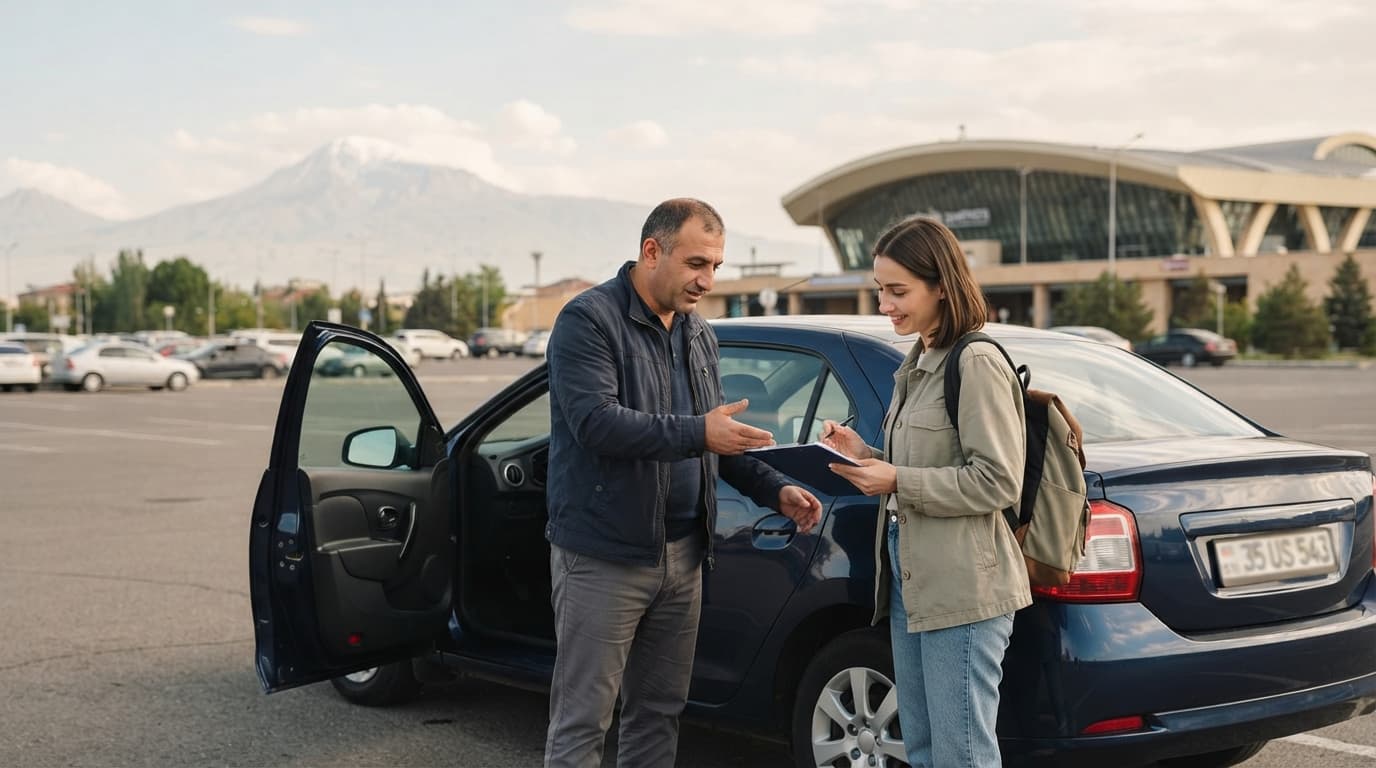
- At the pickup point (for example, Zvartnots airport), switch on the lights and confirm the brakes and wipers work.
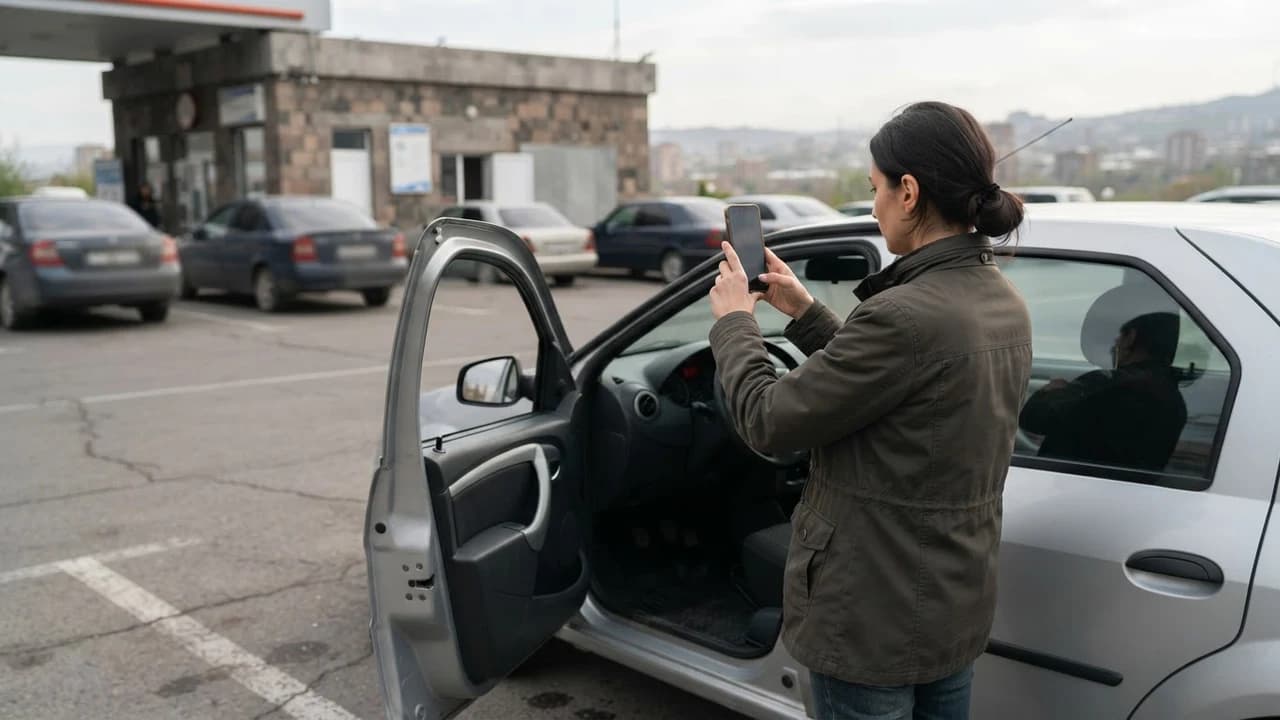
- Record existing damage, fuel level and both signatures in the handover act — photos prevent disputes.
- Ask the owner about the insurance policy summary and see the document; don't assume the coverage.
- Download maps on your phone and check current fine rules on the police website.
- Drive slowly for the first 10 minutes, training your eye on three things: the color of circles, the direction of triangles, the lines on the asphalt.
If a sign is unclear, the safest decision is always the same: slow down or stop somewhere safe. No sign demands a split-second risk.
Frequently Asked Questions
What happens if I get a fine in a rented car?
The fine is recorded against the car's plate number and passes to the owner. Each owner sets their own terms in the listing — who pays and how it's calculated. Clarify this before the rental, not after.
Is a foreign driving licence valid in Armenia?
In many cases yes, but the rules depend on the country and the type of document. We explain this in detail in a separate guide with verified sources, and we recommend reading it before renting a car.
What do I do if a sign has only Armenian text?
Rely on shape and color — a triangle warns, a circle prohibits, blue informs. If the decision is critical (a turn, an entrance), slow down or use your navigator. Most directional signs on main routes are repeated in Latin script.
Related Search Paths
Continue the topic with these verified related guides.
This is general information. JanCar does not receive or hold a vehicle deposit. Check price, deposit, insurance and every other term on the listing and directly with the owner.
More JanCar guides
Continue with these closely related practical guides.
Frequently asked questions
What happens if I get a fine in a rented car?
The fine is recorded against the car's plate number and passes to the owner. Each owner sets their own terms in the listing — who pays and how it's calculated. Clarify this before the rental, not after.
Is a foreign driving licence valid in Armenia?
In many cases yes, but the rules depend on the country and the type of document. We explain this in detail in a separate guide with verified sources, and we recommend reading it before renting a car.
What do I do if a sign has only Armenian text?
Rely on shape and color — a triangle warns, a circle prohibits, blue informs. If the decision is critical (a turn, an entrance), slow down or use your navigator. Most directional signs on main routes are repeated in Latin script.
Where to go next
Sources
- JanCar — how it works
jancar.am · official source
- JanCar car catalogue
jancar.am · official source