
Livestock and Farm Machinery on the Road: How to Drive Through Rural Areas
Slow down well before the village, keep your distance from herds and tractors, don't lean on the horn, and take extra care at dusk.
8 min read
In this article
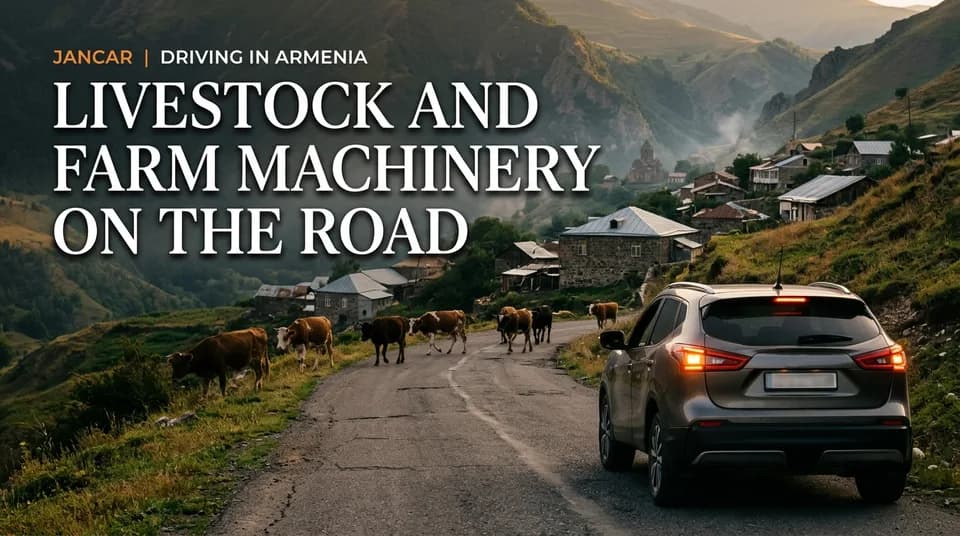
When there's livestock on a rural road, slow down early. Don't wait and brake at the last second. Keep a wide gap from cows, sheep, tractors and combines, never sound the horn at animals, and be extra careful at dusk. A herd stepping onto the asphalt without warning is normal in Syunik, Gegharkunik and Lori.
Slow down before you reach the village
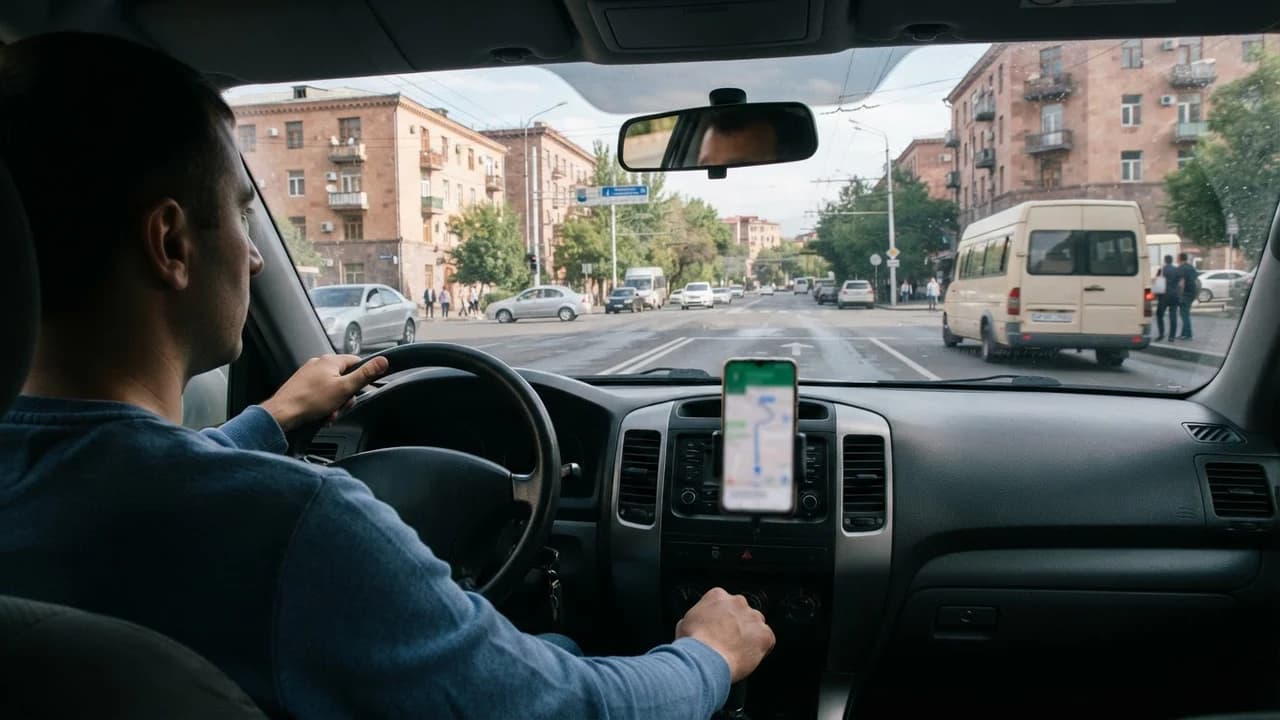
Lift off the throttle while you're still well outside the settlement, and drop to a speed at which you can stop smoothly. Behind a bend or a rise there may be a herd, a tractor, or a trailer loaded with stones. So your speed has to be low before the bend, not in it.
The permitted speed is set by road signs and the rules in force. We don't quote figures here. Check the current text of the rules in the Armenian legal acts database, arlis.am.
Signs that mean a village or an animal crossing
A village begins at the corresponding sign, and a warning triangle marks a livestock crossing. But signs can be missing or hidden, so read the road itself: wet marks on the asphalt, dung, fences, a row of houses. They tell you animals cross here every day.
Cows on the road: what to do and how much room to leave
If a cow or a herd is on the road, slow down, stop and wait until the way is clear. We won't put the safe distance in metres. What matters is that you can stop if the animal swerves suddenly. A cow may stand still, turn round or bolt in any direction.
A herd ahead: stop and wait
In front of a herd, stopping is the best move. Switch off your high beams if the animals are coming toward you, and wait for the herdsman or for the herd to pass. Herdsmen usually steer their animals, so if one waves you on, follow his signal. Animals walk past a stationary car much more calmly.
Picture the mountain road in Syunik, or the Sevan to Martuni road, with a blind bend near a village. The driver slows before the bend, sees the herd on the far side and stops. He dips his lights, waits until the herdsman moves the animals to the verge, and only then rolls forward slowly. That's an illustration, not a real case or a statistic.
Why you shouldn't push through the herd
Creeping through a herd is dangerous, because your moving car sends the animals scattering in every direction. A calf can jump out in front of you, a big cow can kick the side. The animal gets hurt and so does the car. A few minutes of waiting is always cheaper.
Autumn and spring: when herds are on the move
In spring and autumn herds go to pasture and come back, so you meet animals on rural roads more often. Autumn adds fog and wet leaves: the first cuts visibility, the second cuts grip. In high-altitude villages herds usually return in the evening, which makes evening the most dangerous time. Slow down early then.
Why you shouldn't use the horn
A long or sharp horn blast at a herd frightens the animals and can throw them into your path. Cows don't "obey" a sound. They run in unpredictable directions.
A short warning toot is fine only when a herdsman or an oncoming driver can't see you. Otherwise, slow down and wait.
Tractors and slow farm machinery on narrow roads
Overtake a tractor or combine on a narrow road only when the road is wide, the stretch ahead is long and clear, and overtaking is allowed at that spot. In every other case, keep your distance and wait. Farm machinery often carries a load wider than the vehicle itself, and mud and dust fall from its wheels.
When overtaking isn't worth the risk
A big gap gives you visibility and time. Dust or mud behind a tractor can cover your windscreen, so don't tuck in close. Many tractors stop a few hundred metres on to turn into a field track. If the driver moves to the right, he's often making room for you.
Junctions, bends and blind spots
Don't start overtaking before a bend, a crest or a junction, even when the road looks empty. Ahead there may be an oncoming car, a second tractor or a herd. Judge a suitable stretch only when you can see the end of the road.
When a tractor comes up behind you
If a tractor closes in from behind, reduce speed and let it pass where the road is wide. Don't speed up to keep it behind you, and don't block it: heavy machinery can't stop quickly. Pull toward the right edge where it's safe, and wait.
Machinery leaving a field often leaves spilled hay or load debris on the road. It may lie in your lane, so slow down early. After a field exit the asphalt can carry mud and turn slippery. Brake early and smoothly.
Dusk and night: animals show up late
At dusk animals and machinery are seen late, so slow down, switch your lights on, and don't drive tired. A dark cow on dark asphalt is almost invisible, and your eyes adjust slowly at twilight. The danger peaks when herds are heading home.
For night driving in detail, see the separate article linked below. And a long drive wears down your reaction time, so stop along the way.
Before you set off: check the rental terms
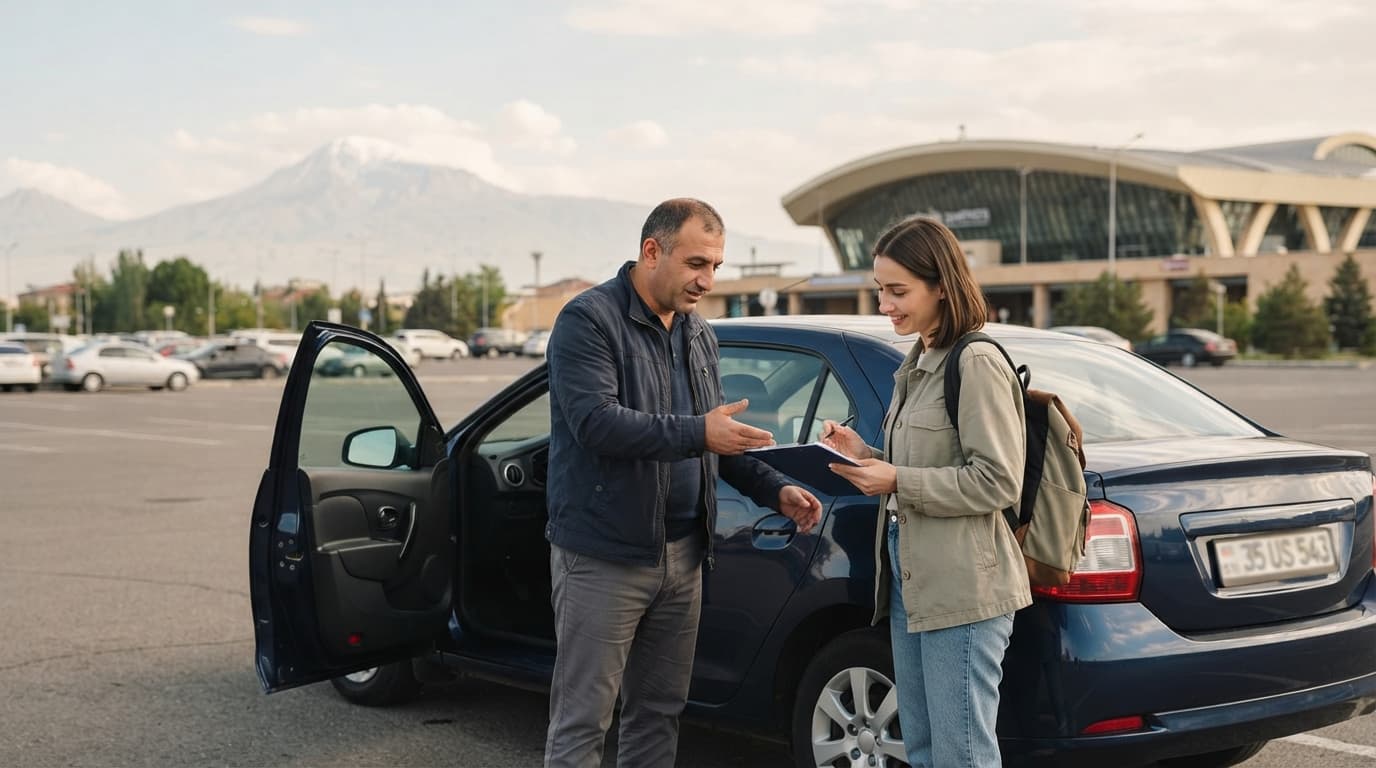
If you're renting the car, settle the rural-road terms with the owner beforehand, by phone and when you see the car. It isn't a legal requirement, just plain caution that prevents arguments later. Ask this:
- Does the ad or the owner state a mileage limit?
- Are trips on rural and unpaved roads allowed?
- What does the owner expect if the car is damaged in a collision with an animal?
- What insurance is there, and what does it cover? Don't assume the policy's cover. Ask to see it.
Agree on these points directly with the owner, ideally in writing or by message. Don't prepay before you've seen the car and its documents. Photograph the car the same day and note the fuel level.
If you hit an animal in a rental car
After a collision, stop in a safe place, switch on your hazard lights, check whether anyone is hurt, and call the owner. Do it in this order:
- Pull over to the edge of the road, switch off the engine, set out the warning triangle.
- If anyone is hurt or there's danger, call 112. Otherwise contact the road police.
- Photograph the scene, the damage to the car and the animal. Note the time.
- Call the owner of the rental car and agree what happens next. The points in your agreement matter.
- Write everything down and keep the documents.
Check the official procedure on the police website, roadpolice.am. We don't quote a fine for animals on the road. Don't trust figures going round social media, and check the current rule on arlis.am, noting the date.
What to photograph and what to write down
Photograph so that it's clear later what happened. Useful shots:
- the car's plate and its position on the road,
- the animal's position,
- the road sign, or the absence of one,
- visibility conditions: light, fog, dusk.
If the herdsman or the animal's owner is nearby, write down his name and phone number. Keep the owner's reply as a message, so the agreement stays in writing.
If the animal is injured or has run off
Don't approach a frightened, injured animal: it can lash out suddenly. Keep a safe distance, switch on your hazards and set out the warning triangle so other drivers slow down early. If the animal has run off, record that too and photograph the spot. For any duty to report and the procedure, check roadpolice.am and arlis.am. We don't invent rules here.
Quick reminder: 6 rules for rural roads
- Slow down before the village.
- Stop and wait in front of a herd.
- Don't sound the horn.
- Don't overtake on a bend.
- Switch your lights on at dusk.
- After a collision, call the owner.
If rural driving makes you uneasy, you can look for a car with a driver. JanCar is a classifieds board with cars with and without a driver, and you call the owner directly. In the catalog at /cars you can pick the "with driver" rental type and ask the owner by phone what terms apply to trips to villages.
Frequently asked questions
What should I do when a cow is standing in the middle of the road?
Slow down, stop at a safe distance and wait until the animal moves off or the herdsman leads it away. Don't sound the horn, and don't try to drive through the herd.
Can I overtake a tractor on a narrow road?
Only if the road is wide, a long clear stretch is visible ahead and overtaking is allowed there. Never start before a bend, a rise or a junction.
What should I do if I hit an animal in a rental car?
Stop in a safe place, switch on your hazard lights, call 112 or the police if needed, photograph the scene and the damage, then call the car's owner.
Where to go next
- Night Driving on Armenia's Mountain Roads — a deeper look at the risk from animals at dusk and after dark.
- Driving in Fog in the Mountains: Rules and Checklist — for spotting animals and machinery when visibility is poor.
- Gravel Road in a Rental Car: Keep Going or Turn Back? — another rural-road situation in a rental car.
- Calling the Car Owner: How to Handle the Conversation and What to Write Down — a starting point for calling the owner after a collision or damage.
- With or Without a Driver: How to Choose Your Rental Type in Armenia — if rural driving worries you, consider the option with a driver.