
Driving Sharp Mountain Hairpins: A Practical Guide
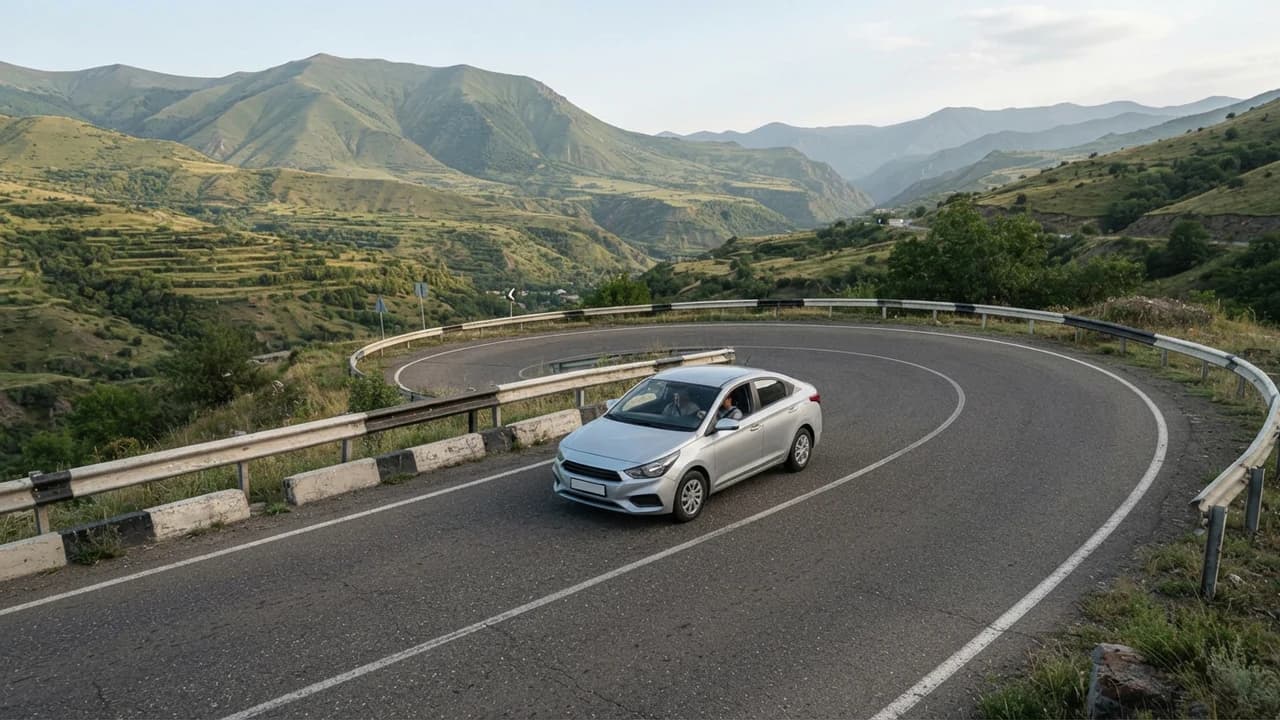
The foundation of driving sharp mountain hairpins is slowing down before the bend, staying in your own lane, and leaving room for oncoming traffic.
6 min read
In this article
The core of driving sharp mountain hairpins is braking on the straight before the turn begins, staying inside your own lane, and leaving space for an oncoming car in a blind bend.
In Armenia, almost every long route crosses a mountain road — the Selim Pass, the Tavush–Dilijan highway, the Arzni–Tsaghkadzor stretch. These bends are perfectly drivable if you keep four simple rules. Below they're explained step by step, with the specifics of a rented car included.
Why a sharp mountain hairpin is risky
A sharp hairpin is risky because it combines three factors: limited visibility, limited space, and variable road surface. You can't see what's coming toward you, and the edge is often a cliff face or a drop.
The most common mistakes are four:
- Braking inside the bend rather than before it — the car's weight shifts onto the front wheels at exactly the moment of the turn.
- Crossing into the left lane in a blind bend, to "widen the angle."
- Using the same speed downhill as uphill, without engine braking.
- Ignoring tire condition — especially in spring and autumn, when the surface is partly damp.
Loading changes the picture too: a fully loaded car needs a longer braking distance, so your speed should be lower than it would be in an empty one.
Step by step: how to take a sharp hairpin
Taking a sharp hairpin safely comes down to four sequential steps: slow down before the bend, stay in your own lane, manage your sightlines, and leave room for oncoming traffic.
Step 1: Slow down before the bend
Brake on the straight section, before the turn starts. By the time you're in the bend, your foot should already be off the brake, and the gear chosen so the engine holds your speed. If you find yourself braking mid-bend, you started too late.
Step 2: Stay in your own lane
Your left wheel should never cross the center line in a blind bend. On a narrow road that means hugging the right side — but not the very edge, where there may be loose rock, damp soil or a pothole.
Step 3: Manage limited visibility
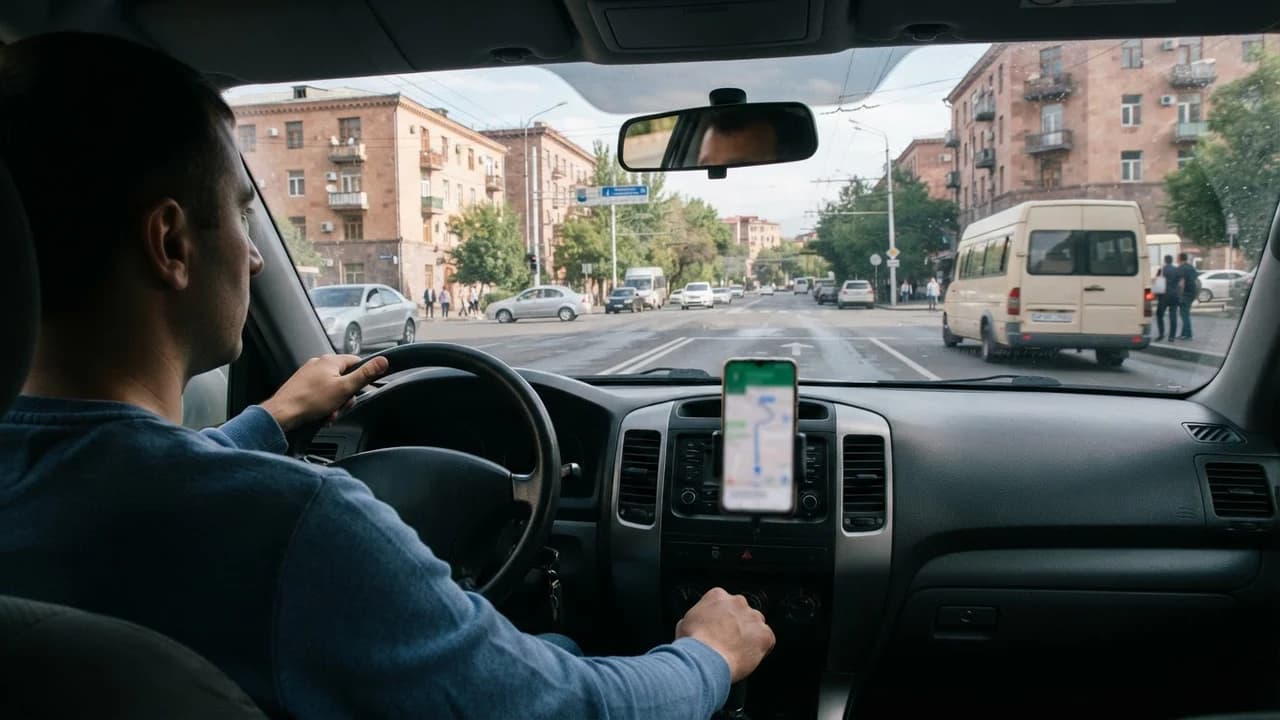
Drive through a blind bend as if a car could appear from the opposite direction at any second. Where visibility is nearly zero, use your horn if needed. Check traffic rules and their amendments in the official register of legal acts of the Republic of Armenia (arlis.am), and current announcements on the police website (roadpolice.am) — note the date you checked, since rules can be updated.
Step 4: Leave room for the oncoming car
A truck, bus or tractor in a sharp hairpin often uses part of your lane as well. Stay right and be ready to slow down or stop before the bend — not in the middle of it.
Speed and positioning: a practical guide
There's no universal "safe speed" for mountain hairpins — speed depends on the radius of the bend, the surface, your load and your visibility. Verify any numerical limit against road signs and the current traffic rules, not articles like this one.
The practical principle looks like this:
Situation
Positioning
Main rule
Blind bend, uphill
Right lane, away from the edge
Brake before the bend, climb in gear
Blind bend, downhill
Right lane
Hold speed with the engine, not the brakes
Narrow section, oncoming truck
As far right as possible
If necessary, stop somewhere safe
If the bend seems to "arrive too fast," that's a signal: your speed already exceeds what you can react to.
What to confirm in advance — especially in a rented car
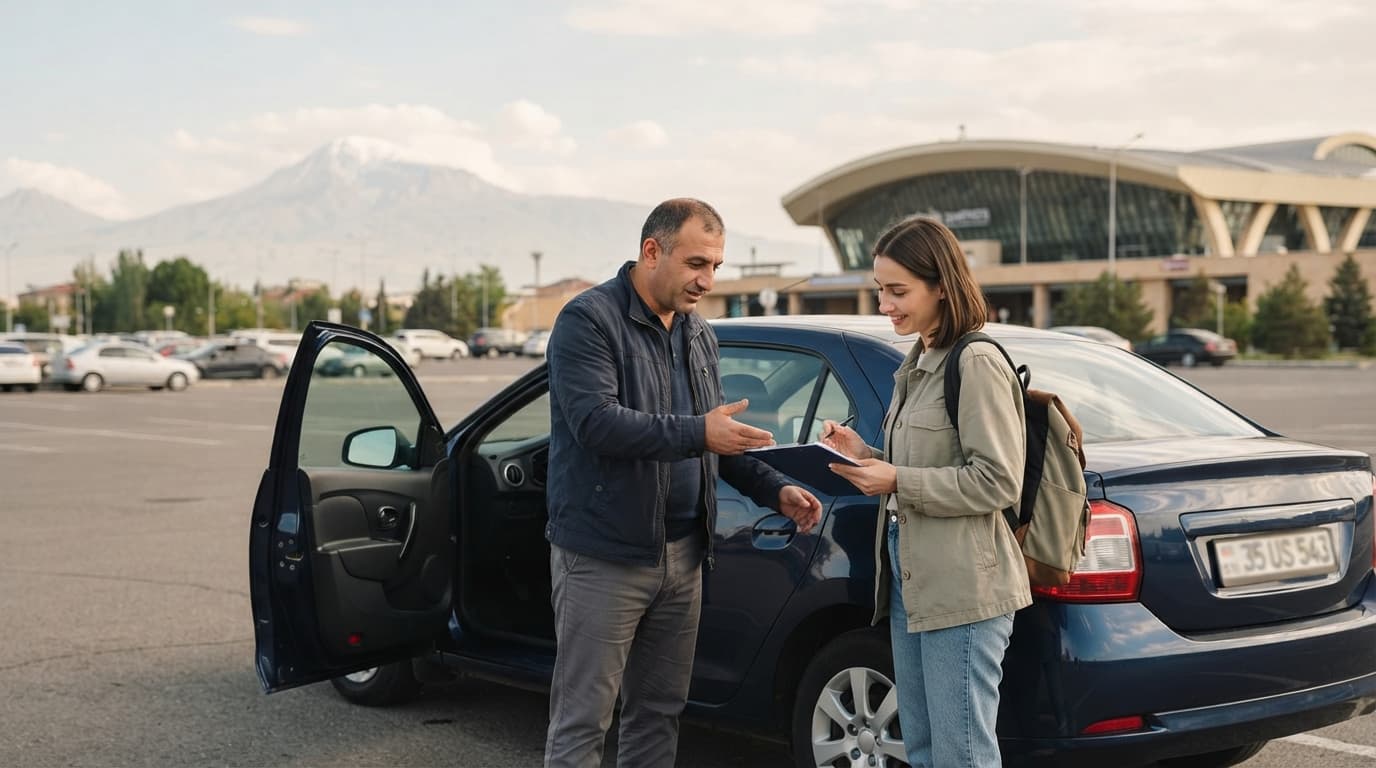
Before taking a rented car onto a mountain road, confirm the insurance coverage, the deposit terms, the type of tires and the car's condition — through the listing and directly with the owner.
JanCar is a connecting platform: the car, price, deposit, insurance and handover terms are set by the listing, agreed with the owner ("host" — the vehicle owner), and fixed in the rental agreement. JanCar does not receive or hold a deposit: if the owner specifies one, its amount and transfer are arranged directly between the two parties.
Checklist to confirm beforehand:
- Insurance policy — ask to see the actual document and establish exactly what it covers, without assumptions.
- Tires — in rainy or cold season, check their condition and type.
- Brakes and lights — a short test at handover saves problems later.
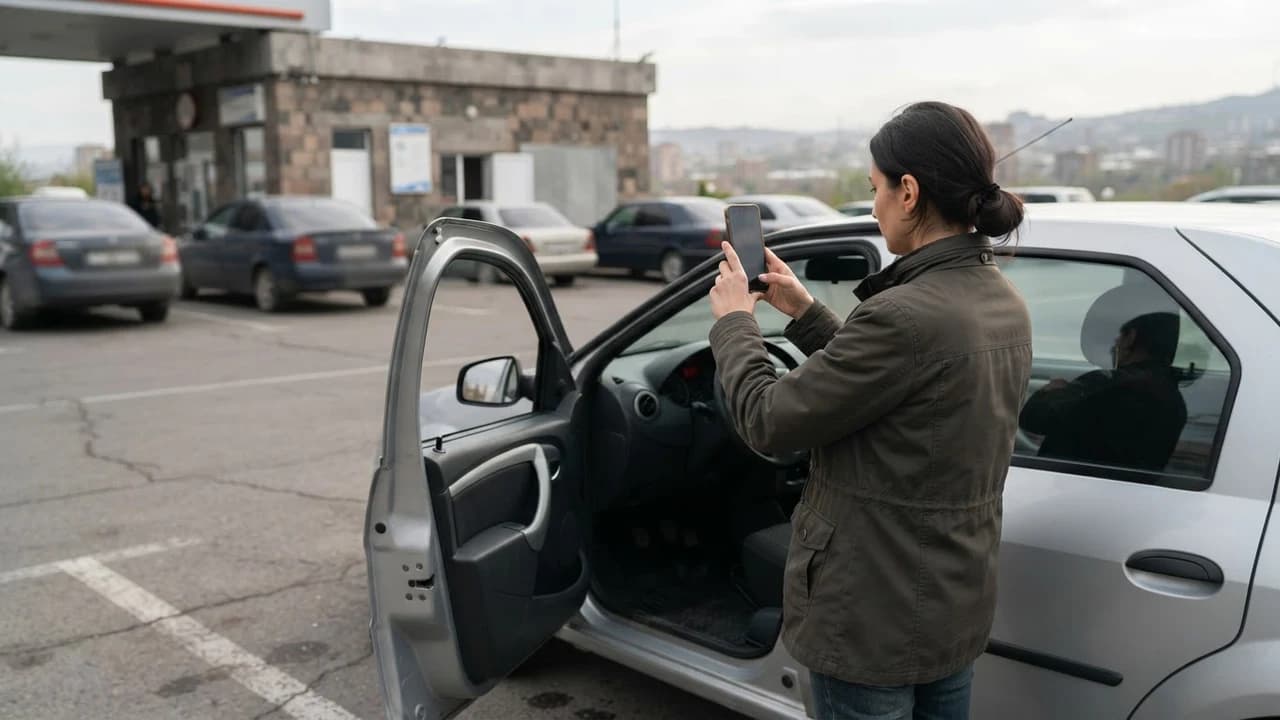
- Handover act — photos, a fuel-level record and a diagram of existing damage, signed by both sides, reduce the risk of disputes.
Checklist: before you hit the road
Before setting out on a mountain route, run through this list:
- Weather and road conditions checked that same day, not last week.
- Tire condition and spare wheel checked.
- Brakes tested on a straight section.
- Insurance document and deposit terms confirmed with the owner.
- Handover act and photos completed with both signatures.
- Fuel level recorded — gas stations are scarce in mountain sections.
- An alternative route identified: if the bends worry you, the longer but easier road is always the safer choice.
If any point doesn't check out, postpone the trip or pick a flatter alternative. The mountain isn't going anywhere.
Frequently asked questions
What speed should I drive in a sharp hairpin?
The speed at which you could stop within your line of sight — without braking inside the bend. Specific numerical limits are set by road signs and the current traffic rules; verify them on arlis.am, noting the date of your check.
Which side do I position myself on in a blind bend?
Always in your own (right) lane — never crossing the center line, but also not at the road's edge, where the surface is often at its worst.
Can I take a rented car over the Selim Pass?
That's decided not by the platform but by the owner's terms and the rental agreement. Confirm in the listing whether that route is allowed, and verify the insurance coverage against the actual document. Check the road's current condition with official sources on the day you travel.
Related search paths
Continue the topic with these verified related guides.
This is general information. JanCar does not receive or hold a vehicle deposit. Check price, deposit, insurance and every other term on the listing and directly with the owner.
More JanCar guides
Continue with these closely related practical guides.
- Engine Braking on Mountain Descents: A Practical Guide
- Replying to a Car Rental Inquiry: A Practical Guide
- Yerevan to Tsaghkadzor by Rental Car: A Practical Route Plan
- Night Driving on Armenia's Mountain Roads
- Driver Fatigue on Mountain Roads: A Practical Guide
- Rental Car to a Hiking Trailhead: Checklist
Frequently asked questions
What speed should I drive in a sharp hairpin?
The speed at which you could stop within your line of sight — without braking inside the bend. Specific numerical limits are set by road signs and the current traffic rules; verify them on arlis.am, noting the date of your check.
Which side do I position myself on in a blind bend?
Always in your own (right) lane — never crossing the center line, but also not at the road's edge, where the surface is often at its worst.
Can I take a rented car over the Selim Pass?
That's decided not by the platform but by the owner's terms and the rental agreement. Confirm in the listing whether that route is allowed, and verify the insurance coverage against the actual document. Check the road's current condition with official sources on the day you travel.
Where to go next
Sources
- JanCar — how it works
jancar.am · official source
- JanCar car catalogue
jancar.am · official source