
Car Rental Fuel Policy: A Practical Guide
The most common policy is full-to-full: you pick up the car with a full tank and return it full. On JanCar, the exact terms are set by each owner in their listing.
6 min read
In this article
The most common policy is full-to-full: you pick up the car with a full tank and return it full. On JanCar, the exact terms are set by each owner in their listing.
If you're renting a car in Armenia, the fuel question usually works like this: you get a full tank, you bring back a full tank. That's the "full-to-full" policy, and it's fair to both sides — you only pay for the petrol you actually burned.
JanCar is a peer-to-peer platform. Cars belong to independent owners ("hosts"), not to the platform itself. So the fuel policy, just like the price, deposit and insurance, is written into every individual listing. Read that section before booking, and ask the owner any awkward questions up front.
What Is a Fuel Policy in Car Rental?
A fuel policy is a set of terms that decides four things: the tank level at pickup, the level at return, the type of fuel, and how a shortfall is calculated if you bring the car back emptier than you got it.
These terms live in two places: the listing and the rental agreement you sign with the owner. If the listing and the contract say different things, sort it out before signing — not on return day.
Full-to-Full, Full-to-Empty and Prepaid Options Compared
In Armenia you'll most often run into three models. Each has its place, depending on your route and timing.
Policy
How it works
Who it suits
Full-to-full
You receive it full, you return it full
City trips and medium routes
Full-to-empty
You receive it full, pay for the whole tank
Very short rentals, if you'll actually use the fuel
Prepaid
You pay for fuel upfront; leftovers usually aren't refunded
Rarely worth it for the renter
When Is Full-to-Full the Best Deal?
Full-to-full wins almost every time when you plan to refuel yourself. Say you pick up a car at Zvartnots airport for a long drive to Gyumri or Sevan — you'll be stopping at a petrol station anyway, so paying for fuel upfront makes no sense.
Full-to-empty can only make sense if you're returning the car nearly empty — after a one-day rental, for example. But do the maths first: the price of a whole tank usually exceeds what you'd actually spend.
Step by Step: Checking Fuel at Pickup and Return
Ninety percent of fuel disputes are prevented by two simple actions: a photo and a receipt. Here's the complete checklist.
- Photograph the fuel gauge at pickup so the needle and markings are clearly visible. Do the same at return.
- Agree the level with the owner and record it in the handover act, signed by both sides.
- Check the fuel type against the listing — petrol, diesel, gas or electric.
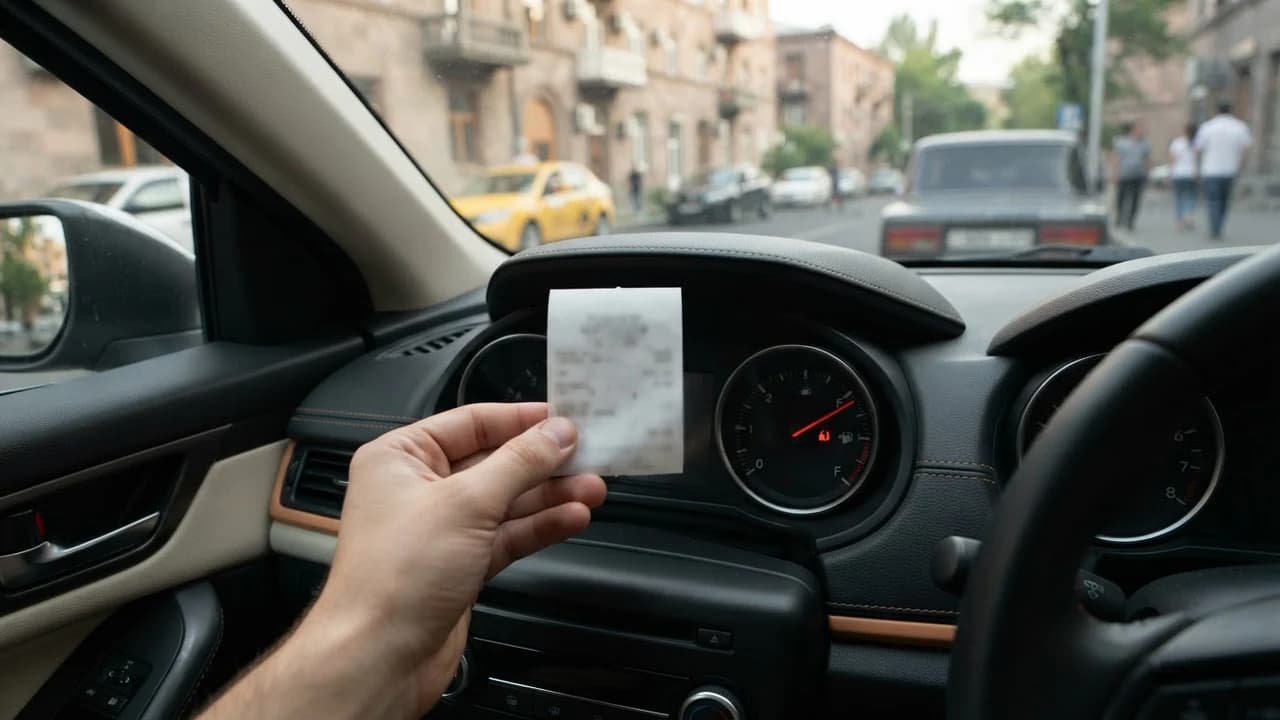
- Keep the refuelling receipt until the return is fully completed.
- Refuel to the same level before returning as at pickup, then compare the gauge photos.
Proof of Refuelling: Receipt and Photo
The receipt is your main piece of evidence: it shows the date, time, litres pumped and fuel type. If the owner doubts you returned the tank full, the receipt plus a gauge photo together close the question.
For an electric car, keep a screenshot of the charging station app instead of a receipt — showing the final percentage and time. For LPG cars, clarify which tank counts: the gas cylinder or the petrol reserve tank.
Checking the Fuel Type Against the Listing
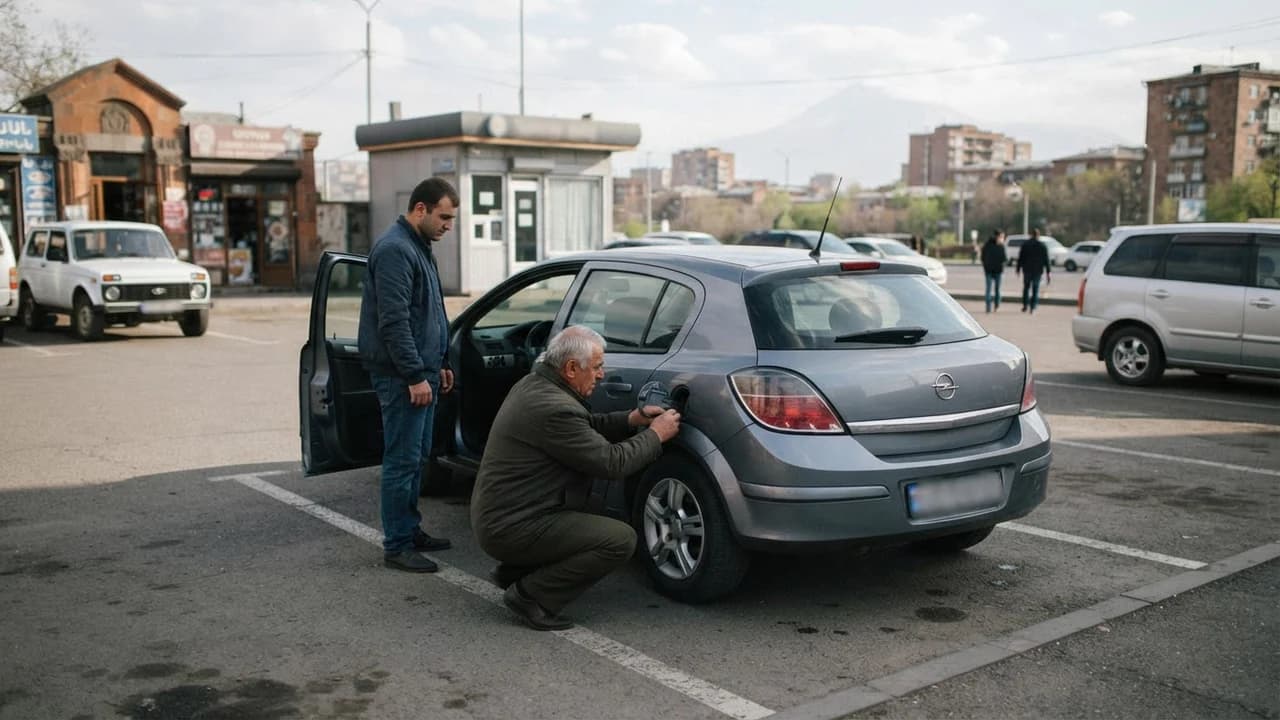
Wrong fuel is the most expensive mistake there is. Putting petrol into a diesel engine can damage it, and the damage will be treated as renter-caused. Beyond the listing, check the label inside the fuel filler flap or simply ask the owner at pickup.
If the car runs on LPG, also find out whether gas refuelling falls under the policy or only petrol does. It's a two-minute question that saves an entire dispute.
How Is a Fuel Shortage Calculated?
The shortfall follows a simple formula: pickup level minus return level, multiplied by tank capacity and the price per litre. Example: a 50-litre tank, picked up at 100 percent, returned at 80 percent — the shortfall is 20 percent, i.e. 10 litres.
If the owner has set the price at 600 drams per litre, you'd pay 10 × 600 = 6,000 drams. These figures are purely a maths example — real prices vary and depend on the owner's terms.
Two subtleties deserve attention. First, the owner's per-litre price may differ from the pump price, since they often factor in their own time and the convenience of refuelling for you. Second, the per-litre price must be written into the contract or listing — not agreed verbally.
Fuel prices in Armenia aren't state-regulated and they change. For current prices, trust petrol station boards or official sources on the day of purchase — not old articles.
JanCar's Role and the Limits of Owner-Set Terms
JanCar is a connecting platform: it helps you find a car, compare listings and get in touch with the owner. The fuel policy, price, deposit, insurance and handover terms are set by the owner in the listing, and they're fixed in the contract.
The deposit deserves special mention here: JanCar doesn't receive, block or hold a security deposit. If the owner has listed one, you arrange it directly between yourselves, according to the contract.
From this follows a simple rule: any fuel promise that matters to you should appear in writing — in the listing or the contract. A verbal agreement isn't proof at the moment of return.
Frequently Asked Questions
How do I prove I refuelled before returning the car?
Keep the refuelling receipt and photograph the fuel gauge at the moment of return. Together they show the date, the litres and the final level. Ideally, the level is also recorded in the handover act, signed by both sides.
Can I return the car with less fuel and pay for the difference?
Technically some owners allow this, at their stated per-litre price — but it always costs more than refuelling yourself. Besides, the shortfall price must be written into the contract beforehand.
What if the gauge is broken or shows nothing?
Don't take the car without an alternative way to measure. Agree the level with the owner using a receipt or a dipstick, and fix the result in the handover act — with a photo.
Related Reading
Continue the topic with these verified related guides.
- Car Rental Insurance: MTPL, CASCO, Deposit and Handover Act
- Renting a Car in Armenia: A Guide with JanCar
This is general information. JanCar does not receive or hold a vehicle deposit. Check price, deposit, insurance and every other term on the listing and directly with the owner.
Frequently asked questions
How do I prove I refuelled before returning the car?
Keep the refuelling receipt and photograph the fuel gauge at the moment of return. Together they show the date, the litres and the final level. Ideally, the level is also recorded in the handover act, signed by both sides.
Can I return the car with less fuel and pay for the difference?
Technically some owners allow this, at their stated per-litre price — but it always costs more than refuelling yourself. Besides, the shortfall price must be written into the contract beforehand.
What if the gauge is broken or shows nothing?
Don't take the car without an alternative way to measure. Agree the level with the owner using a receipt or a dipstick, and fix the result in the handover act — with a photo.