
Test Drive in a Rental Car: What to Check in the First Minutes
Five to ten minutes on a quiet street, with the owner beside you. Here's the route, from the dashboard to the parking brake, and what to do if the car feels wrong.
6 min read
In this article
Before you accept a rental car, drive it for 5-10 minutes with the owner on a quiet street. Check the brakes, the steering, the gears, the dashboard warning lights after the engine starts, the A/C, the lights and wipers, the smells and noises, and finally the parking brake on a slope. If something's off, get it written down with the owner on the spot, before you leave, or walk away from the car.
JanCar is a classifieds board and doesn't inspect cars. The "Verified" badge only means the car's registration certificate was checked at moderation. You judge the technical condition yourself, so the test drive is your one real check.
In Russian this is called «тест-драйв перед арендой авто». Что проверить при аренде авто с владельцем: тормоза, руль, коробку передач, лампы на панели, кондиционер, свет и ручник на уклоне. In English, a test drive before renting a car is the same thing. What to check on a rental car test drive in Armenia: brakes, steering, gearbox, warning lights, A/C, lights and wipers, and the parking brake on a slope.
Before you move: agree on the route and the rules
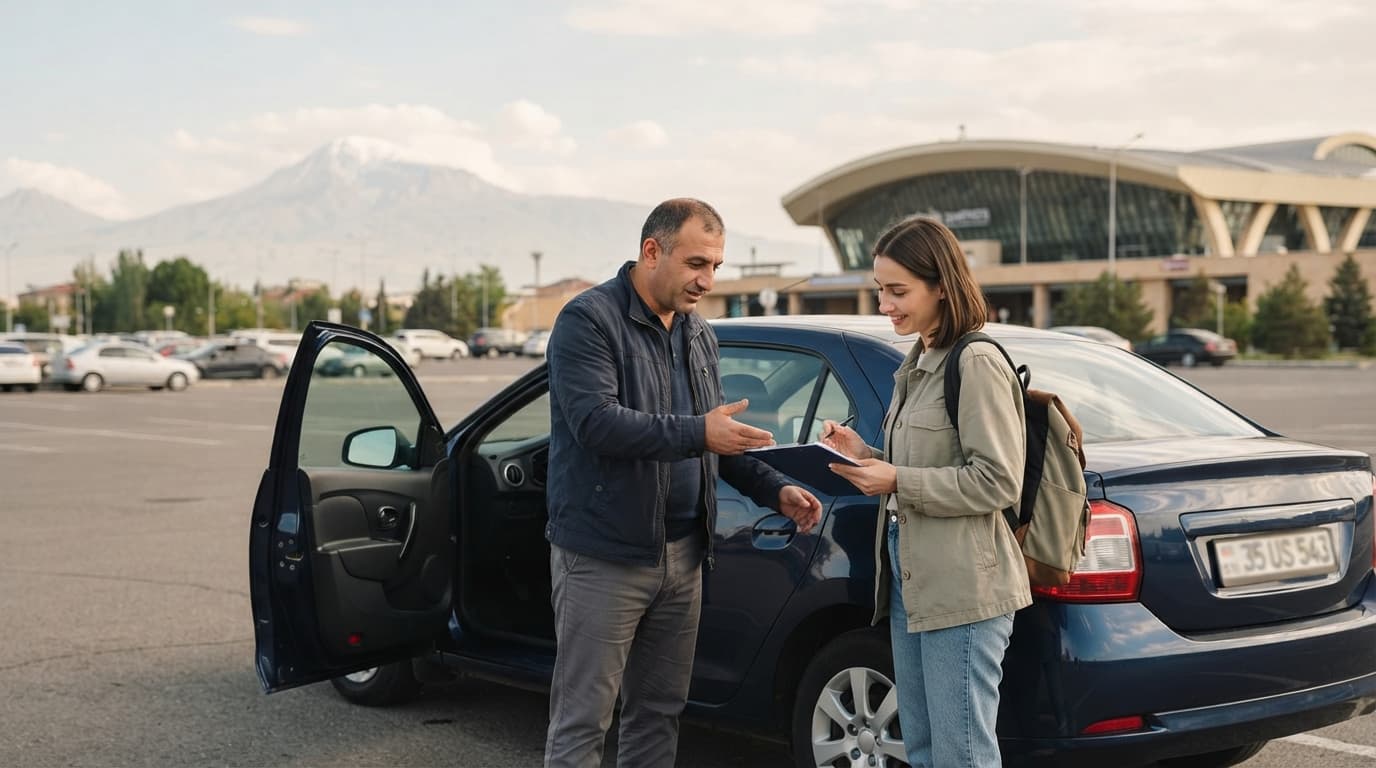
Settle three things before you set off: who drives, which route you'll take, and how long it will last. Do it there, next to the car, not after you've started rolling. A decent owner treats a test drive as a normal step.
Who drives and which documents you need
You drive, the owner sits in the passenger seat. Bring your driving licence. Before you move, check the car's vehicle registration certificate and the compulsory motor insurance (OSAGO). Don't assume what the insurance covers. Ask the owner and read the policy. JanCar doesn't guarantee any insurance cover.
If the owner hands you the keys before even looking at your licence, or won't let you drive at all, ask why. You wouldn't accept a car you haven't driven.
A 5-10 minute route: a quiet street and a slope
The route should include a quiet street with little traffic, a straight stretch where you can reach about 40-60 km/h, and a small slope. In Yerevan that's easy to find in residential neighbourhoods. The timing and speed are practical advice, not law. Always keep your speed in line with the street and the rules; for the current rules see the Armenian Road Police site.
After the engine starts: dashboard, smells and sounds
Once the engine is running, the dashboard warning lights should go out within a few seconds. A light that stays on is a reason to stop and ask questions. What each light means is covered in a separate guide, so we won't repeat it here.
Before you pull away, sit in the stationary car for half a minute and listen and sniff. A burnt smell, petrol or exhaust fumes in the cabin, a knocking or squealing from the engine: any of these means you stop and ask. "It's always like that" isn't an answer. Ask the owner to explain specifically.
Brakes and steering: pulling, vibration, pedal feel
Brakes and steering are the most important part of the test drive, because they go straight to safety. Do this check only where there's no car right behind you.
Brakes
Brake gently the first time, before you build up speed. Then brake harder once or twice, without stamping on it. Watch for:
- the car pulling to one side, which is a serious warning sign;
- squealing or grinding when you brake;
- a brake pedal that feels soft, sinks, or returns slowly;
- vibration in the pedal or the steering wheel while braking.
Steering
On a straight, flat road, loosen your grip on the steering wheel slightly. A healthy car tracks straight. If it drifts to one side, the cause may be tyre pressure or the suspension. Vibration in the wheel between 40 and 60 km/h should be noted too. In turns, listen for noises, and the free play in the wheel shouldn't be large.
Gears: clutch or automatic
On a manual, the clutch should engage smoothly, without jerking, and the gears should go in without grinding. An automatic should shift without delay or jolts. Either way, check reverse.
On a manual, try every gear, including first and second on a small slope. If the clutch bites at the very top of the pedal travel, or slips, that's a sign of wear.
In an automatic transmission, accelerate from a stop and notice whether the shifts are smooth. A delay after you select "D", or a jolt as it changes gear, is worth asking about.
A/C, heating, lights and wipers
The A/C should cool and the heater should warm, both within a few minutes. Check every air direction and every fan speed. If the A/C smells, note that as well.
To check the lights on the street, stop somewhere safe and have the owner get out and look: low and high beams, indicators and brake lights. Run the wipers with washer fluid. The details are in a separate guide on checking lights and wipers.
The parking brake on a slope
On a slope, the parking brake should hold the car on its own. This is the last step, once you trust the other brakes. Stop on a small slope with the owner beside you and your foot on the brake pedal.
Pull the parking brake, then slowly release the pedal. If the car stays put, all is well. If it starts to roll, press the pedal again at once and note the result, or walk away. Pick a gentle slope with no traffic.
What to write down and when to walk away
Record what you found in the same place, with the owner, before you leave. The simplest way is one short message that you send the owner and they confirm. For example: "During the test drive: squeak on the left when braking, A/C cools weakly." You can also write it on the agreement. JanCar doesn't store that note and doesn't act as an intermediary.
Checking photos and video is a separate step: the test drive adds to the final pickup checklist but doesn't replace it.
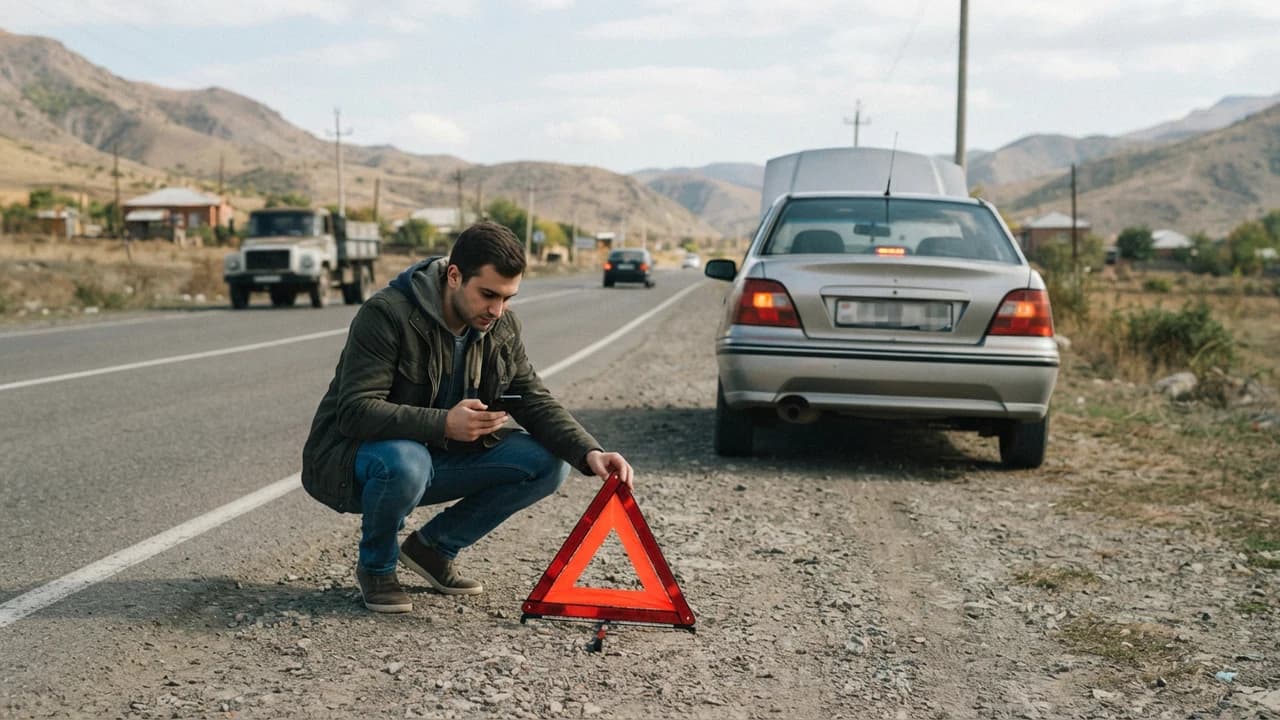
Walk away from the car if:
- the brakes pull or feel unsafe;
- dashboard warning lights stay on;
- the parking brake doesn't hold;
- the owner won't allow a test drive or rushes you;
- they demand a prepayment before showing you the car and its documents.
Walking away is your right. The deal is direct, and JanCar doesn't accept or hold money or a security deposit. If the owner asks for a deposit, the two of you arrange it directly, and nothing gets paid before the check. After you walk away, you can keep looking through other ads.
Frequently asked questions
How long should a test drive take?
Usually 5-10 minutes is enough if the route has a quiet street, a straight stretch and a small slope. That's practical advice, not law. Agree the route with the owner before you set off.
Can I turn the car down after the test drive?
Yes. If the brakes pull, a warning light stays on or the parking brake doesn't hold, you can walk away. The deal is direct and JanCar holds no money, so don't pay anything in advance.
What should I do if the owner won't allow a test drive?
Treat it as a warning sign, especially if they also ask for a prepayment. Don't pay anything until you've seen the car and its documents and driven it. You can walk away and pick another ad.
Where to go next
- Meeting a car owner for the first time: place, time and safety rules — where and how to meet the owner before the test drive.
- Checking a rental car's documents at handover: registration certificate, OSAGO and power of attorney — the documents get checked before the test drive.
- Checking a rental car's lights and wipers — a detailed check for lights and wipers.
- Final car pickup checklist: 10 steps — the photo inspection and final steps that a test drive doesn't replace.
- Fake car rental ads: how to spot them from photos, price and behaviour — how to recognise an owner who refuses a test drive or demands a prepayment.