
Hail and Thunderstorms on the Road: How to Protect Your Passengers and the Car
In hail or a thunderstorm, the order of things matters: a safe stop and your passengers first, then photos and a call to the car's owner. Here are the steps.
6 min read
In this article
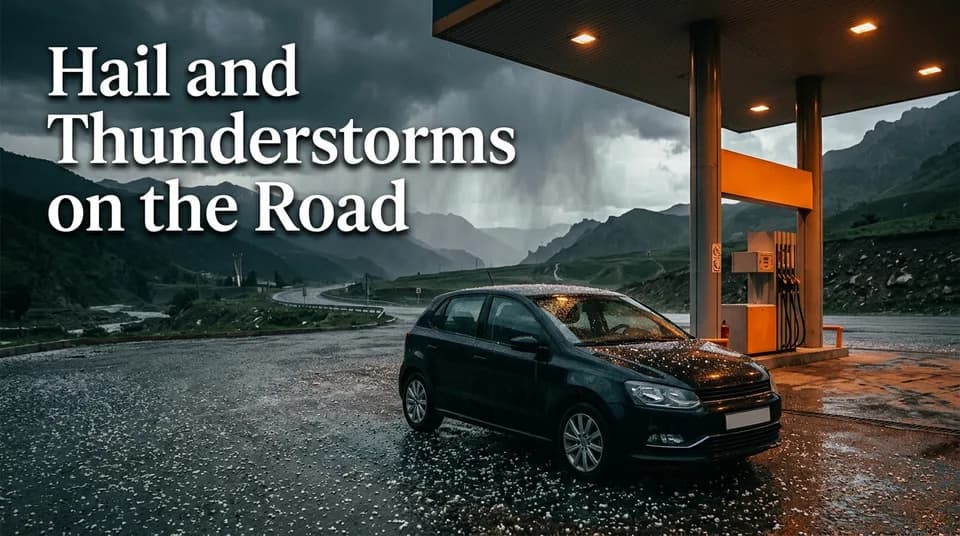
When hail and thunder hit, slow down, switch on your dipped headlights and get the car off the carriageway: a lay-by, a petrol station or a covered car park. Stay inside with your passengers. Once the hail stops, photograph the damage and call the car's owner.
First steps: speed, lights and visibility
Ease off the speed smoothly and put the dipped headlights on straight away. Lift your foot off the accelerator, brake gently and keep both hands on the wheel. On wet asphalt, a sudden manoeuvre is all it takes to start a skid.
Why visibility drops so fast
In a downpour or hail, the windscreen is covered with water within seconds and the car ahead almost disappears. The drumming of hailstones on the roof is distracting, too.
Switch on the wipers and the dipped beams. Full beams scatter in the water and dazzle you. And don't rely on hazard lights while moving: they're no substitute for good visibility, and they hide your turn signals.
Distance and braking on a wet road
Braking distances grow on a wet road, so leave a much bigger gap to the car ahead than usual. On mountain descents, don't hold the brake down continuously. Hold your speed with engine braking instead.
Where to stop: choosing a safe spot
The best place is covered and off the carriageway: a petrol station, a covered car park or a widened road shoulder. On highways like Yerevan–Sevan and Yerevan–Gyumri, petrol stations usually sit right beside the road, so watch for the signs well ahead.
If you have to stop at the roadside, pull as far right as you can and turn on your hazard lights. Once you've stopped, they warn whoever is coming up behind you.
Where not to stop
Avoid these places:
- on or under a bridge, where water can collect and flow,
- under a lone tree, where there's a risk of lightning and falling branches,
- in a dry riverbed or gully, where water can suddenly rush through,
- on a narrow mountain bend, where other drivers won't see you,
- right on the carriageway, in the middle of the road.
If there's no shelter
If there's no shelter, drive slowly until you find a suitable spot. If visibility is close to zero, pull up at the roadside with your hazard lights on and wait. On a [mountain pass](/en/blog/night-driving-on-armenias-mountain-roads), stop only where the car can be seen from a distance, never on a slope or a narrow stretch.
Standing water and running water on the road
Never drive into water when you don't know how deep it is. Standing water hides potholes, open manhole covers and damaged asphalt. In mountain and low-lying areas, water runs downhill and pools at the low points of the road or in underpasses.
Why you shouldn't drive into water of unknown depth
Enter too fast and you get aquaplaning: the tyres lose contact with the asphalt and the car stops answering the steering. If it happens, don't brake hard. Lift off the accelerator and keep the wheel straight.
After you've crossed the water, brake gently a few times to check that the brakes still work. Accidents with running water do happen, so if the current is carrying stones and mud, turn back.
Protecting passengers inside the car
In thunder and hail, the safest place for passengers is inside the closed car, safer than an open field or under a tree. Don't get out. And during lightning, don't touch the car's metal parts: the door handle, the steering wheel frame, the door frame.
Children and elderly passengers
Children stay in their seats with belts fastened. Calm elderly or frightened passengers, and explain briefly and clearly what you're doing. If needed, move them to the side of the car where less hail is hitting.
Away from the glass
Hail can crack or break glass, so passengers should sit away from the windows: heads not leaning against them, hands and faces covered. If you can, park so that the windscreen faces away from the wind.
When the hail is over: check and photograph
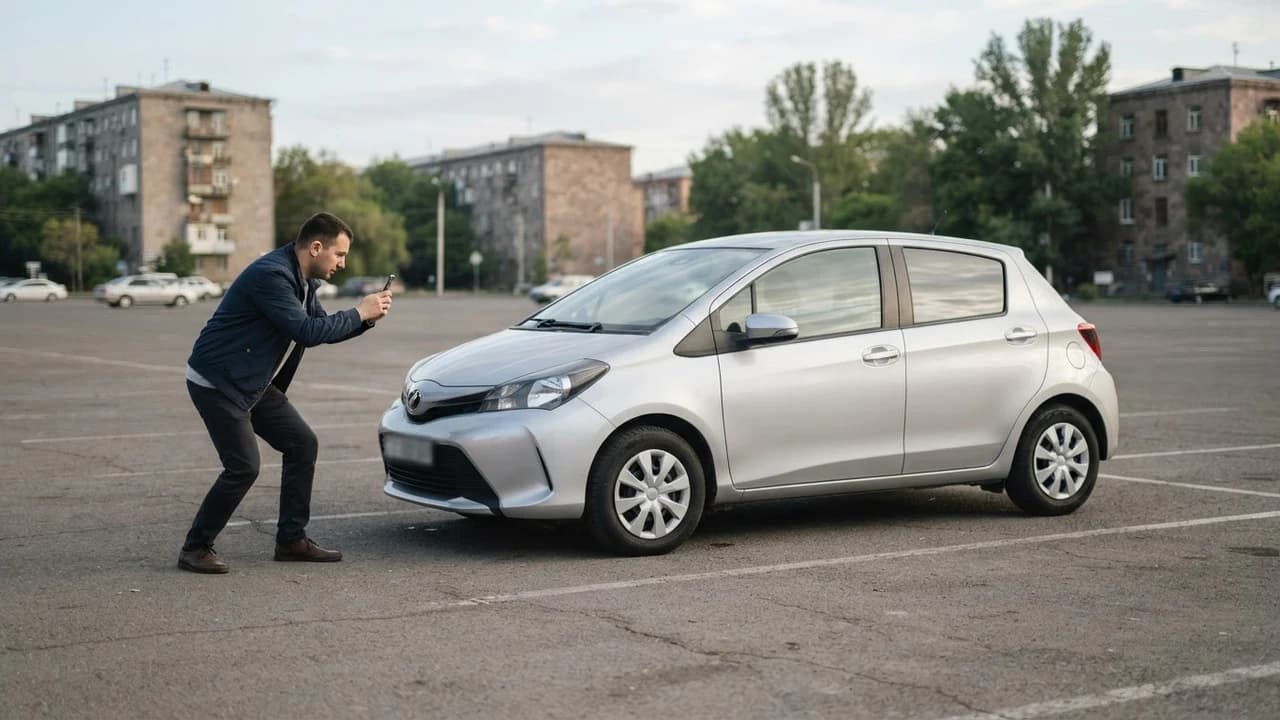
Once the hail has ended, the first job is to take photos, before the car moves at all. The damage may be only on the upper surfaces, but it's worth collecting evidence on the spot.
What to photograph and how
- All four sides: front, back, left and right.
- The roof, the bonnet, the boot.
- The front and rear windows, the mirrors.
- A close-up of every dent or crack.
- One wide shot that shows the road and the weather, so it's clear where you are.
Keep the photos unedited. Your phone saves the date and time automatically, so leave it that way.
What to check before you set off
Look: is the glass cracked, are the lights broken, are the mirrors and tyres intact? If the glass is cracked or the lights don't work, it's better to call the owner first and ask whether you should continue.
Hail damage to a rental car: how to call the owner
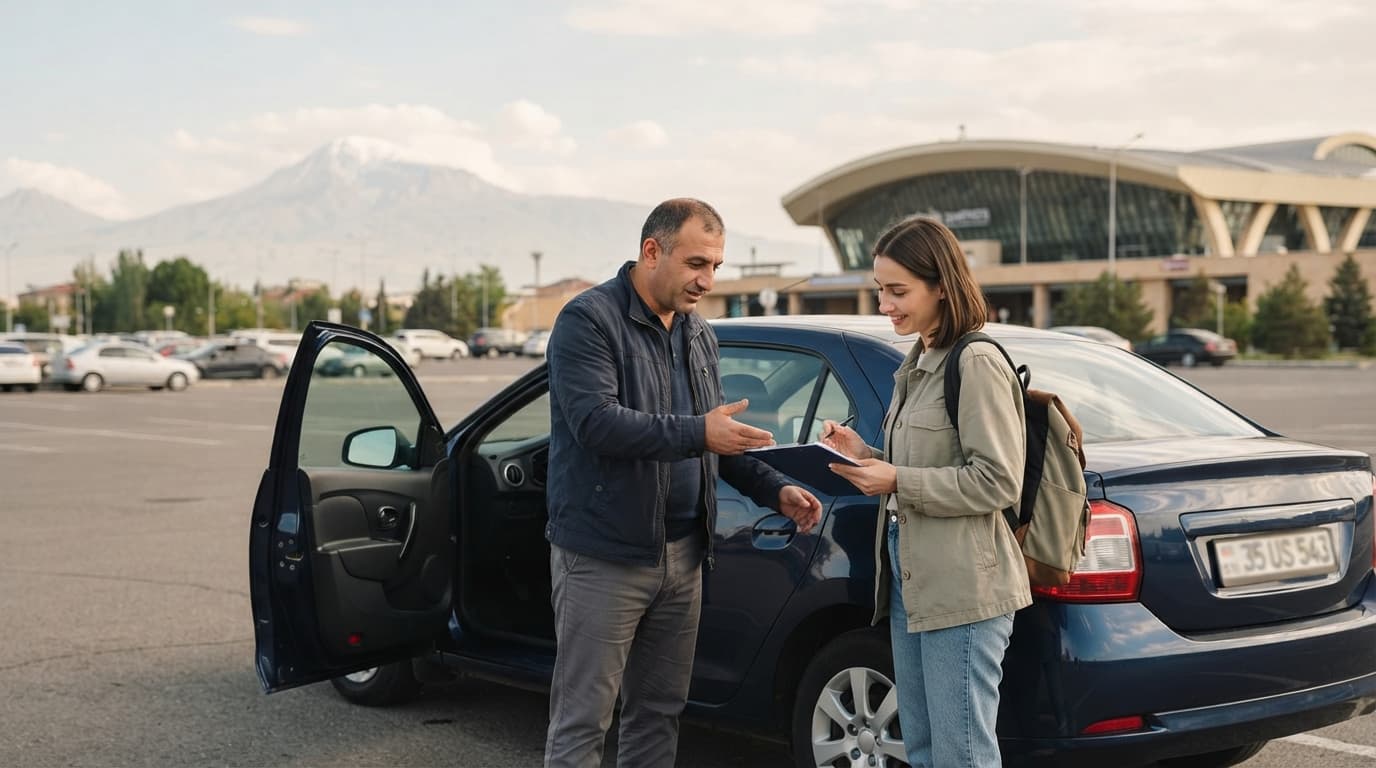
If a rental car is damaged, call the owner immediately, the same day, without waiting for the return time. On JanCar, the owner's phone number is shown on the ad once you sign in, and you call them directly.
What to say on the call
Keep it short: who you are, which car, where you are, what happened and what's damaged. Say that everyone is unhurt. Say you have photos, and send them. Ask whether you can keep driving.
What to write down, and what we don't promise
Write down what you agreed and when. It's better to confirm what was said by message. This article promises no insurance cover whatsoever: it depends on the owner's policy and on the agreement between renter and owner. How the damage is compensated is decided by the two sides, in their contract.
The same goes for a security deposit: JanCar doesn't receive or hold one. If the owner has stated a deposit on the ad, the two sides arrange it directly. JanCar doesn't provide insurance and doesn't settle disputes.
How to cut the risk before you set off
The easiest way to reduce risk is to check the weather forecast before the trip. Use the Armenian Hydrometeorological Service website, especially if the route is mountainous or long.
When you rent, ask the owner what applies in case of weather damage, whether the car has insurance and what it covers. Ask to see the policy, and don't assume the cover. Don't pay in advance until you've seen the car and its documents. At handover, photograph the car, which will help you compare later.
JanCar is a classifieds board for car rental across Armenia: you'll find cars with or without a driver and call the owners directly.
Frequently asked questions
What should I do if a rental car is damaged by hail?
First get to a safe place, then photograph the car from every side, including the roof, bonnet and windows. Then call the owner at once and send them the photos. Compensation for the damage is decided by the renter and the owner in their own agreement.
Where should I stop during hail?
Choose a petrol station, a covered car park or a lay-by at the roadside. Don't stop on a bridge, under a lone tree, in a dry riverbed or on a narrow mountain bend.
In a thunderstorm, should I stay in the car or get out?
Stay in the car. A closed car is safer than open ground or standing under a tree. During lightning, don't touch metal parts and sit away from the windows.
Where to go next
- Driving in Armenia in Summer: A Checklist — summer is hail and thunderstorm season, so the checklist is the logical next step.
- Potholes and Rough Asphalt: How to Protect Tyres and Wheel Rims — standing water hides potholes.
- Driving in Fog in the Mountains: Rules and Checklist — the other mountain situation where visibility drops.
- Calling the Car Owner: How to Handle the Conversation and What to Write Down — the details of telling the owner about damage.
- Renting a Car from an Owner: How JanCar Works — from the ad to the call and the agreement.