
Armenia Emergency Numbers for Drivers: A Guide
Before you set off in a rental car in Armenia, save the official emergency numbers on your phone: 102, 103, 104 and 911. Here's who to call when — and how to send your location.
8 min read
In this article
Before you set off in a rental car in Armenia, save the official emergency numbers on your phone: 102, 103, 104 and 911. Here's who to call when — and how to send your location.
Key takeaways
Every driver in Armenia should have the country's official emergency numbers saved before setting off: police — 102, ambulance — 103, rescue service — 104, and 911 as the unified emergency line. These numbers are verified on the official website of the Police of Armenia (roadpolice.am) and the gov.am government portal as of this article's publication date.
The correct order of actions after an accident is: secure your own safety → call emergency services if there is an injury or traffic is at risk → notify the car owner via JanCar's internal chat → document the evidence with photos and handover-act details.
- Calling the owner or JanCar never replaces calling emergency services.
- JanCar is a connecting platform; price, deposit, insurance and handover terms are set by the listing and the rental contract.
- Practice sending your location before the trip — not from the roadside.
Which emergency numbers should a driver save in Armenia?
A driver in Armenia should keep four numbers: 102 for police, 103 for medical emergencies, 104 for the rescue service, and 911 as the unified emergency call. This list was verified on roadpolice.am, the website of the Republic of Armenia Police, at the time of publication. Numbers can change, so double-check the official source before a long trip.
Service
Number
When to call
Police
102
Accident, traffic obstruction, legal incident
Ambulance
103
An injured person or someone feeling unwell
Rescue service
104
Fire, vehicle sinking, rescue operations
Unified emergency call
911
When you're not sure who to call
Save the numbers in your phone's favourites section and write them down on paper at the same time — under the fuel cap or with the documents. Phones run out of battery; paper doesn't.
If you can't remember the numbers: the unified emergency call
A call to 911 gets routed to the appropriate service based on how you describe the situation. Saying "there's been an accident," "someone's injured" or "the car has broken down" is enough — the operator connects you to the right service. For foreign renters, it's the simplest option.
What order to act in during a breakdown or accident
In a breakdown or accident, act in this order: first secure personal safety, then call emergency services if needed, then notify the car owner, and finally document the evidence. This sequence protects both people and your rights under the rental contract.
The first minutes on the road
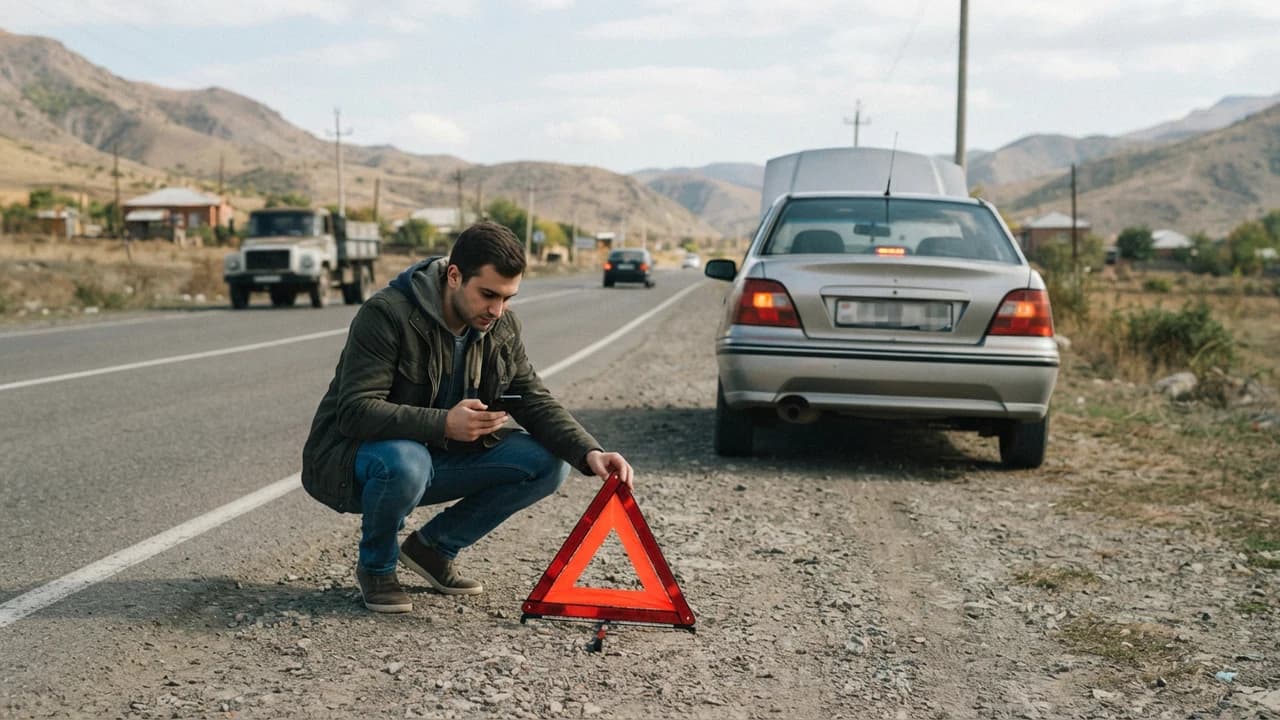
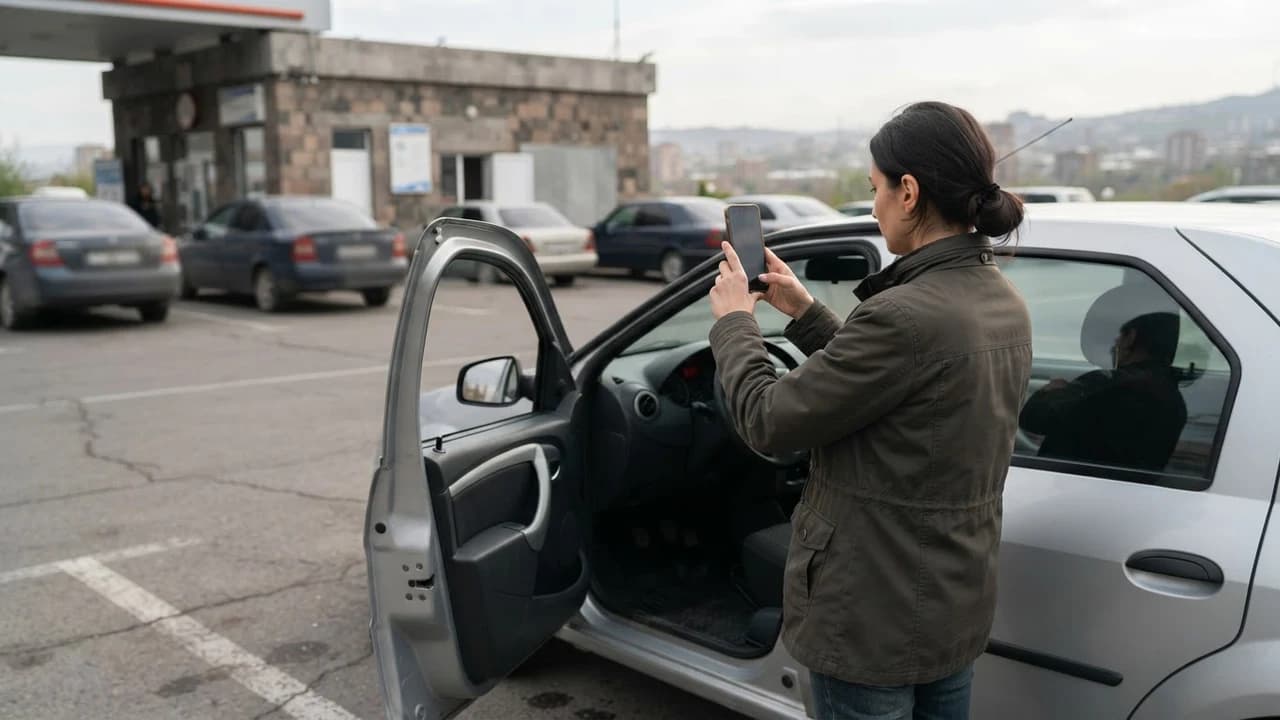
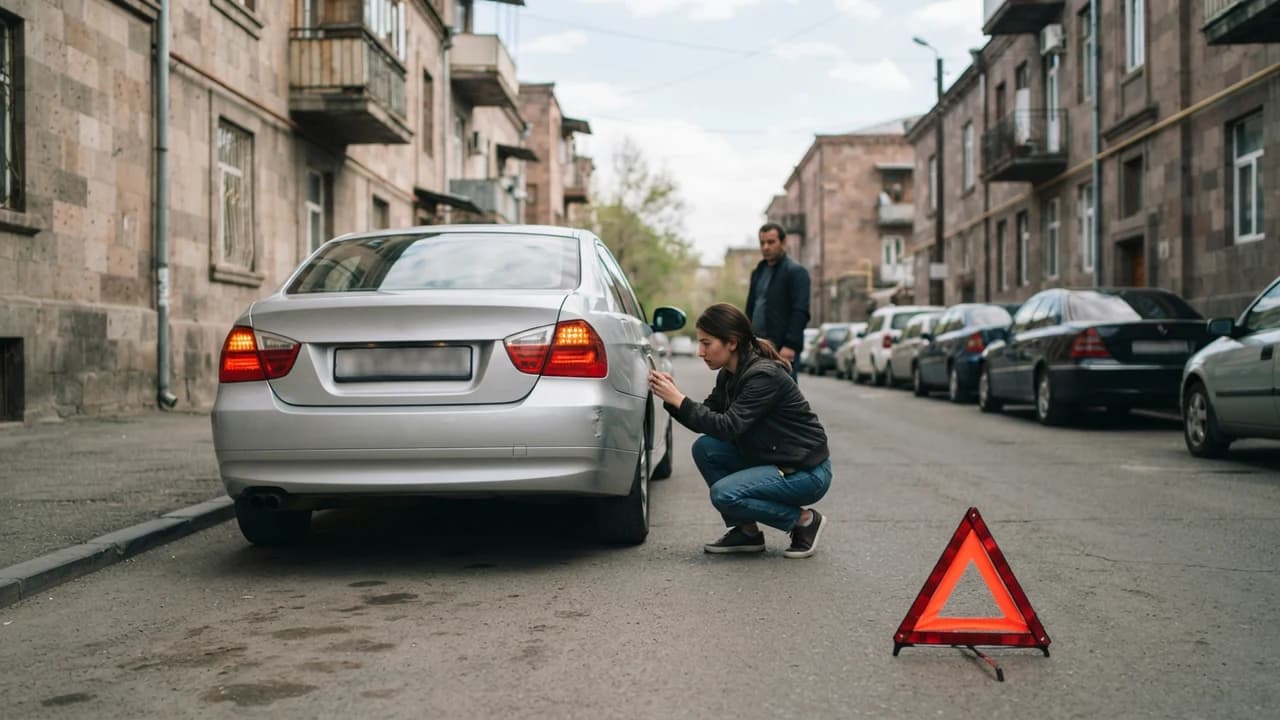
- Pull the car out of the traffic zone and switch on the hazard lights.
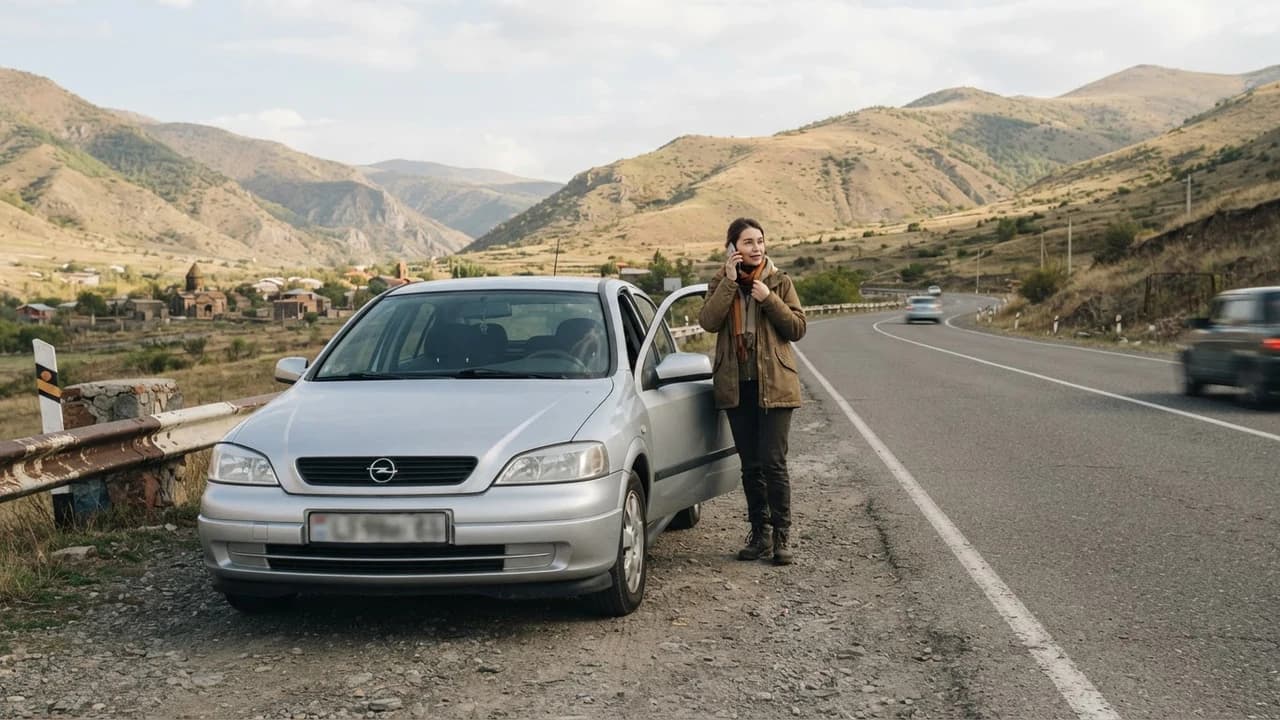
- Get out only if it's safe; on a mountain road stay well clear of the edge.
- Place the warning triangle if the car has one — it's usually noted in the handover act.
- Only then make your calls.
When to call police, and when ambulance
Call the ambulance (103) first if anyone is injured — even if the injuries seem minor. Call the police (102) when two cars have collided, traffic is blocked, or the parties can't reach agreement. The rescue service (104) is needed for fire, a sinking vehicle, or someone trapped in an inaccessible spot.
A breakdown isn't an accident. If the car simply won't move but nobody is hurt and traffic isn't endangered, your first call goes to the car owner — through JanCar's internal chat or the contact method listed in the listing. The owner will usually offer their own towing solution; who pays for the tow is decided by the contract, so clarify that point in advance.
During the documentation stage, photograph the scene, the damage, the licence plates and the fuel level. Photos and handover-act details reduce disputes over deposits and damage.
How to send your exact location during a call
To send your location, open your point in Google Maps or Yandex Maps, tap "Share" and send the link by SMS or messenger. These steps follow Google's official support instructions. An accurate pin saves rescuers time, especially on mountain roads where addresses often don't exist.
Step by step on Android and iPhone
- Open Google Maps and wait until the dot shows your precise position.
- Long-press the dot if it's inaccurate, then open the point card.
- Tap the "Share" button.
- Choose SMS or Viber/WhatsApp and send the link to the operator or the owner.
On iPhone you can also use the "Share My Location" feature in the Find My app. Yandex Maps' "My Location" button works on the same principle. Try these steps at home before the trip so that, in a stressful moment, they're automatic.
What to tell the operator
Tell the operator four things: where you are (road name, kilometre marker or the sent pin), what happened, whether there are injuries, and your phone number. Don't forget to mention that the car is rented — it helps services assess the situation correctly.
JanCar's role in an emergency: what the platform does and doesn't do
JanCar is a connecting platform: it doesn't replace emergency services, doesn't receive or hold a deposit, doesn't guarantee insurance decisions, and doesn't own the cars. Listings belong to independent owners; price, mileage, fuel, deposit, insurance and pickup location are set by the listing and fixed in the rental contract.
If a deposit is stated in the listing, it's arranged directly between renter and owner. The platform has no control over that money and no responsibility for its return. That's why the handover act, photos and signatures from both sides are your main protection.
In an emergency, JanCar's internal chat is a convenient way to notify the owner and exchange documents. But the first call always goes to emergency services if life or traffic is at risk.
What to confirm with the car owner before the trip
Before the trip, confirm five points with the owner: the valid insurance policy (MTPL or comprehensive) and its coverage, whether a deposit applies and how it's returned, towing and transport terms, the contact number and hours in case of breakdown, and the existing damage recorded in the handover act. Ask to see the insurance policy with your own eyes — coverage can't be assumed.
Checklist: before a trip by car
- 102, 103, 104 and 911 are saved in the phone and written down on paper.
- The phone is charged and a car charger is within reach.
- Google Maps' "Share" feature has been tried out in advance.
- The owner's contact number and breakdown procedure are confirmed in chat.
- The insurance policy has been seen, and the handover act is signed by both sides.
- Fuel level and existing damage are documented with photos.
This list takes ten minutes and saves hours in an emergency. If you're still choosing a car, you can compare listings by terms in JanCar's catalogue before hitting the road.
Frequently asked questions
Do emergency numbers work with no credit on the account?
Emergency short numbers are usually free and reachable even with a zero balance, but exact conditions depend on the carrier. Check your mobile operator's official information before the trip.
What should foreigners do while roaming?
You can call local emergency numbers from a roaming phone; if that fails, try 911 or ask people nearby for help. Before arriving in Armenia, check your operator's roaming terms and consider a local SIM card option.
What if there's no signal?
In a dead-zone area, stay near the car if it's safe and try to find higher ground. On mountain roads, signal often reappears a few kilometres along. Before long trips, let the owner know your route and timing.
Related reading paths
Continue the topic with these verified related guides.
- Rental car insurance: MTPL, comprehensive, deposit, handover act
- Renting a car in Armenia: a guide with JanCar
This is general information. JanCar does not receive or hold a vehicle deposit. Check price, deposit, insurance and every other term on the listing and directly with the owner.
Frequently asked questions
Do emergency numbers work with no credit on the account?
Emergency short numbers are usually free and reachable even with a zero balance, but exact conditions depend on the carrier. Check your mobile operator's official information before the trip.
What should foreigners do while roaming?
You can call local emergency numbers from a roaming phone; if that fails, try 911 or ask people nearby for help. Before arriving in Armenia, check your operator's roaming terms and consider a local SIM card option.
What if there's no signal?
In a dead-zone area, stay near the car if it's safe and try to find higher ground. On mountain roads, signal often reappears a few kilometres along. Before long trips, let the owner know your route and timing.
Where to go next
- With a Driver or Self-Drive: How to Choose Your Rental Type in Armenia
- How to Answer Renters' Calls: Your Phone Number, What to Ask, and Written Confirmation
- Wedding Guest Transport: Minivans and Cars with a Driver
- Minibus with a Driver for a Group Trip: What to Confirm on the Phone
- Checking Traffic Fines by Plate Number in Armenia: What to Do with a Rental Car
- Emergency contact card for renters: practical guide